Benefits of Ranking in Google


There is no doubt that Google owns the majority share in the search engine industry. Bing and Yahoo are steadily taking more of that share, and an Apple search engine could do serious damage by having all of their devices default to their own engine. Whatever the case may be in the future, the ranking in Google is currently the most critical for businesses, as the search engine giant owns 70% of the search engine share.

With 3.5 billion search queries per day, your business could garner a lot of website traffic by ranking for keywords related to your business. Given the rise of YouTube, Facebook, Amazon, and more as search engines, just how important is it to rank in Google regarding your SEO?

Ranking on the first page of Google: statistics

Multiple studies have turned out a variety of statistics over the past few years regarding the impact of Google ranking, dealing with factors including:

  • Branded vs. non-branded searches
  • Searches without ads or with ads (ads above and/or beside)
  • Mobile vs. desktop
  • Long-tail keyword searches

When a user performs a search, about 90% of clicks go towards the organic search results, with the remaining 10% to the pay-per-click ads above or beside the organic results. While PPC campaigns are still important in an integrated marketing strategy, ranking organically lets you own those positions and gain more traffic.

This heat map from Mediative shows how most users look past the advertisements to get to organic search results.

search result heat map

Similarly, the percentage of traffic from the first page of Google is about 91%, while only 4% of users click through to the second page or results, 1% to the third page, and then it drops off into fractions of a percent.

google-traffic-by-page-results

This tells us that if you aren’t ranking on the first two pages on Google, the likelihood of you gaining any organic traffic to your website is less than 1%.

Even if you are ranking on the first page of Google, it is obvious that the top results get a higher click-through rate (CTR) than the others. Click-through rate is the number of users that click through to a certain result compared to the rest of the results on the page.

So when it comes to click-through rate on the first page of organic search results, the biggest benefit for ranking in Google is that the first position typically gets about one-third of all clicks, but with many different factors, the results may vary.

This can be backed up by click-through rates of first page organic results in Google.

Click-through rates of first page results

With an ongoing study on CTR by Advanced Web Ranking, which is one of the best keyword tools available, we are able to see results from testing these factors from hundreds of thousands of keyword searches and websites.

So let’s break down the click-through rates for all the different variations of searches with data from the United States.

Overall CTR for all mobile vs. desktop searches

all searches ctr mobile v desktop

Mobile has overtaken desktop as the most-used device for searches on Google, so it is important to have a mobile-friendly website to even be considered for a first-page ranking. In this study, 30% of desktop searches click on the first position, while 27% click on the first position on mobile devices. This could be because on a desktop computer, you can see 6 or 7 results on the page and choose to go with the first, whereas with less landscape on mobile, you only see two or three results and give preference to what seems like the best.

CTR for searches with or without ads

searches with or without ads ctr

When ads are displayed, whether above the organic results or beside them, organic click-through rates take a ten percent hit because users have other options to choose from. This is especially true on mobile where ads are displayed, because they take up the screen before the searcher has to scroll down to organic results.

CTR for branded searches with or without ads

branded searches with or without ads ctr

When someone does a brand search, they are specifically looking for a company that they know, trust, have heard of, or have used before. So there is a much higher likelihood that said brand will show up higher in results, which is why it has the highest CTR of 42 percent among these tests. When ads come into play, it allows for competitors, or even the searched brand itself, to pay for ads that display above organic results and potentially steal traffic from their competition.

CTR for unbranded searches with or without ads

unbranded searches with or without ads ctr

An unbranded search is when a user is looking for a product or service, but they do not know which company they want to use, or they are shopping around for the best prices or features. So it makes sense that there is a bit of a drop with unbranded searches when it comes to unbranded searches, especially when ads are involved. At a 22 percent CTR for the first position of unbranded searches with ads, it is the lowest click-through rate for all of the studies done. If you are doing also doing pay-per-click using Google AdWords, unbranded relevant searches would be the keywords to target, as they are stealing a lot of the traffic from the top organic results.

CTR for branded vs. unbranded desktop searches

branded vs unbranded searches ctr on desktop

A big reason you want to build your brand awareness, loyalty, and trust is so that people begin to search your brand name along with your services or keywords. As you can see, when a branded search is done on desktops, it gets 41 percent of the clicks as opposed to just 26 percent for unbranded searches. However, when it comes to the second position and further down, both searches tend to match when it comes to click-through rate.

CTR for branded vs. unbranded mobile searches

branded vs unbranded searches ctr on mobile

On mobile devices, there isn’t as big of a difference between branded and unbranded searches as there is on desktops – but there is still a difference. Oddly enough, unbranded searches have a higher CTR in positions two through five, and then begin to match up with branded searches.

CTR for long-tail keyword searches on desktop

long tail keyword searches ctr on desktop

Long-tail phrases, which include at least two keywords, pose much more precise intent. Long-tail keywords are less competitive, which makes them easier to rank, and you should consider putting together a very in-depth long-tail keyword list to use in your website copy and content marketing strategy. When searches are done with four or more keywords, they have a slightly higher CTR on desktop than searches done with fewer keywords. But all of them have around a 30 percent CTR on desktops, which is why you should begin to target and track your long-tail keywords.

CTR for long-tail keyword searches on mobilelong tail keyword searches ctr on mobile

When it comes to mobile, long-tail keyword searches tell a slightly different story. While four or more words still get the highest CTR at 32 percent, there is a drastic drop from three keywords to two, and especially to one keyword. One-keyword searches on desktops got a 30 percent CTR, but on mobile they get just a 19 percent CTR.

Calculating your potential traffic

As you can see, there is a huge benefit to ranking on the first page of Google. Your brand awareness will rise, hopefully along with more branded searches, and so will organic traffic to your website.

Let’s say that you ranked for a long-tail keyword that got an estimated 1,000 searches a month. Typically, you would garner about 30 percent of those click-throughs to your website.

1,000 searches a month X .3 CTR = about 300+ more visitors to your website

Now imagine if you started to rank for a combination of different long-tail keywords, or specific buyer keywords for your products and services. You can begin to see how it will add up to a ton of monthly organic traffic to your website, resulting in more leads, sales, and hopefully long-term and loyal customers to your company.

How to get keywords ranking in Google

Without going into too much detail about the entire process that an SEO agency would be able to do, here are some top-level tasks you can do yourself that can help to get your site ranking.

Optimize your website

First and foremost, you want to optimize your website for search engines. This means having a mobile-friendly site with a fast load time and a good user experience. Every page should be optimized with tags and copy, and any issues affecting your website rankings should be addressed.

There are over 200 ranking factors that experts have determined that Google uses. It becomes even more complex, as Google’s Matt Cutts has also stated that some of those ranking factors can have up to 50 different variations.

Therefore, one of the best digital strategies is a content- and data-driven strategy that acquires authoritative links and engages with a social audience.

Your website also needs better copy and a strong customer journey, because without these, users may bounce off of your site and back to the search results where your competition is. If you have a high bounce rate, which is when someone goes to a page and leaves it in under a minute without visiting another page, you should see if your website is making any common website mistakes that are raising your bounce rate.

Keep in mind that the more high-quality content pages you have on your website, the more chances you have to rank. If you have a smaller website with only 10-20 pages, then it will be much harder to steal traffic from your competitors with a larger website presence.

Start producing resourceful content

One easy way to add more relevant pages to your website is to help your visitors find a solution with a resourceful blog. We’ve gone into the benefits of blogging for business before, but essentially, it helps to build your brand and authority, earns trust in your industry, allows you to engage socially by sharing your content across social media networks, and boosts your long-tail rankings  which will drive more traffic – all of which will hopefully travel through your funnel to generate conversions.

The best type of blogging is long-form content, which is content that is generally 1,000-3,000 words.  The average content length ranking on the first page of organic results is typically at least 2,000-2,500 words, as you can see in this chart.

average-content-length-top10

When you create this long-form content, whether it’s an ultimate guide to a service in your industry or a how-to instructional post that walks someone through a problem, you may begin to attract links in your industry through outreach as well as content and social media promotion. With these authoritative and industry relevant links, you will begin to see those content pieces ranking higher, which will result in more organic traffic.

You can use this strategy by looking to see what content your competition has been developing, and create something far better and more valuable. Then you can research who linked to and mentioned them for their content and reach out to them to also get a link. When you can get the same websites that mention your competitors and some more, you should begin to outrank your competitors online.

Other forms of content other than blogging could be creating eBooks, whitepapers, case studies, influencer interviews, videos, infographics, slideshows, and much more.

When it all comes down to it, the main factors in ranking are optimizing your website and earning links, mentions, and shares from your industry. There are are many specific strategies you can use to try and rank online, but sometimes it’s best to worry about your business and leave the rest to the experts when you want your keywords ranking in Google.

SEO strategies CTA

Read more

5 Things to Know About Reputation Management


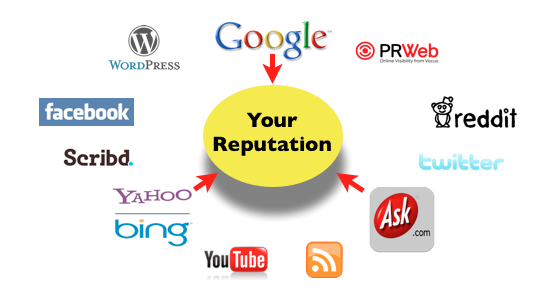
Reputation management is about framing public perception of a company in a positive light. It involves shaping public opinion by influencing online information about that business, such as social media posts, search engine results, and user reviews. How the public perceives your business, goods, or services is your reputation, and managing that reputation is essential when user reviews and ratings are so influential in the minds of today’s consumer.

Your company’s reputation is always on the line, and protecting it is a full-time job. Managing your reputation starts with learning to prevent the negative comments and complaints from being lodged in the first place. Consider these user review statistics:

  • 4 out of 5 prospects will be influenced to change their mind on a purchase based on reviews—good or bad
  • 80% of consumers consider reviews to be on par with personal referrals in terms of trust
  • 90% of all review searches end on the first page

The customer can be a company’s worst nightmare or the brand’s biggest advocate. With the rise in review sites and their increasing availability, they’re being used to praise or condemn companies on a daily basis. A reputation manager’s job is to proactively preserve your reputation by responding quickly and implementing preventive measures that minimize the amount of damaging comments and reviews you might receive.

To understand why this role is essential for businesses, here are five need-to-know facts about reputation management.

1. You can’t do it all by yourself

It takes an immense amount of work and attention to detail to manage a company’s reputation. There are social media accounts to keep up with and customer review sites like Yelp, Angie’s List, and Google Reviews to monitor. Not only that, but customers expect you to respond to their problems via tweet and Facebook post right away or their level of frustration multiplies. That’s a lot of demand per customer, not to mention it calls for someone willing to be unbiased, apologetic, and restrained in his or her responses.

Many companies have made the mistake of writing hasty replies to negative reviews, only to further damage their reputation in the eyes of customers. Respond quickly with the facts, but remember that your comment is going to be read by everyone, not just the reviewer.

2. Reputation management is about more than handling the negative…

It’s also about accentuating the positive.

A reputation manager will spend most of his or her time addressing complaints and reviews on social media, but they’re much more than simple damage control. Protecting your reputation first requires you to build it. Regular upkeep of social media accounts and ensuring your information is positive and telling of what your business does is necessary. It’s imperative that customers have quick, easy access to your Facebook, LinkedIn, and Twitter pages; and that they know how to contact you in the event that they have a complaint, review, or compliment.

Keeping your reputation intact also necessitates regular updates to your social media platforms or blog. This continuous wave of content will allow an individual to direct your audience’s attention to your successes, rather than your failures, as may be the case with inactive social profiles. Content generation is key to burying any bad reviews and making your company seem like it’s keeping on top of providing a better service and experience.

3. You can encourage customers to leave honest reviews…

Just direct them to do so.

review-me

Nearly 80% of the tweets on customer service on any given week are negative in tone. By letting all of your customers know how and where they can give you feedback, you may be prompting satisfied customers to leave good reviews when they may not have otherwise done so.

If a client is happy with a product or service they may simply move on, glad to repeat the transaction in the future; but the same may be true of unhappy customers who may not leave any comment at all. Instead, they share their bad experience offline.

“A dissatisfied customer will tell between 9-15 people about their experience. Around 13% of dissatisfied customers tell more than 20 people,” according to the White House Office of Consumer Affairs.

Having negative reviews won’t instantly destroy your reputation. It’s how you handle those reviews that dictates how customers see you.

4. A few negative reviews won’t hurt you…

But how you handle them might.

While they say it takes 12 positive reviews to undo one complaint, your reputation manager should be well versed in dealing with poor customer experiences quickly and sympathetically.

Respond to these negative experiences promptly.

Tell the customer how you’ve taken measures to prevent their problem in the future, and have the confidence to invite them back once you’ve solved the issue.

Obsessing over or attacking the customers who leave negative reviews will only exacerbate the problem and your reputation.

5. Your reputation is built on what you’ve done…

Not what you are going to do

It would be easy for a business owner to sit down and rave about all of the changes they have in the pipeline, but promising change is not nearly as powerful as demonstrating it. Your reputation will be built upon your actions, not your intentions; and going overboard with future plans will do nothing to alleviate the problems your customers have today. To manage your reputation effectively, you have to focus on what you’re doing now.

  • A sincere apology for a poor customer experience
  • Prompt replies to customer questions and complaints
  • Improving the quality of a service or product as a result of a customer complaint

If you’ve done any of the above then that’s something you can point to as a positive highlight. It demonstrates your company’s ability to listen to a customer’s problem and solve it. Even if your customers have had a few bad experiences in the past, knowing that you work as hard to keep your current clients as you do to secure new ones says a great deal about your business.

When you consider that it costs roughly six times more to acquire a new customer than retain an existing one (Bain & Company), you’ll start to understand the value of keeping clients happy. Building your authority with a reputation manager will help you grow your client list and turn your current customers into loyal brand warriors.

If you’re looking for a marketing agency near you in Lancaster or nearby York and Harrisburg markets, make sure you give us a call. We’d love to help.

Start A Conversation

Read more

The Anatomy of a Successful Email Marketing Campaign

An email marketing campaign is an essential part of any successful marketing strategy. They nurture relationships with prospects, collect invaluable information regarding your customers, and enhance marketing ROI potential. While most email campaigns revolve around “blasting” large batches of emails, the process can easily degrade into something impersonal and annoying for your customers.

Taking the time to develop a thoughtful, engaging, and empathetic email marketing campaign can help ensure your emails are being opened—and read—instead of getting trashed.

A well designed email marketing strategy plays out like theater. First the stage has to be set—your opt-ins, contact gathering, and email marketing strategy development are taken care of first. Next comes the play itself, which includes writing a descriptive subject line, concise copy, and a strong call-to-action. Once you’ve performed, you can analyze the metrics—everything from testing, measuring, and tracking the performance of your email marketing campaign.

Set the stage for your email campaign

Before you can start sending any emails, you have to have a database of contacts to send them to. When you create your opt-in list—the initial exchange of their email and info for a promise of future emails from your company—keep things easy and transparent. You want to ‘set the stage’ for their expectations. Letting them know what you want from them and what they’ll get in return is a good place to start.

Create your objective

Without an objective, how will you know what your emails will be about? This determines the course of your campaign as well as the purpose of your emails. You should know what content you’ll provide your customers with, which will help you develop the content copy and subject line.

Only ask for relevant details

Only ask for the information you absolutely need to conduct your email campaign. This is usually at minimum, a name and an email address—and a business name if you’re a B2B business. Avoid asking for too much information or too many questions as this can easily annoy customers. Don’t worry about extra unnecessary information that you can find out later.

Tell them what they’ll get

Tell the customer why you want their information and what they’ll be getting in return, and make sure it’s something of value, such as a free webinar, eBook, video seminar, or a newsletter. Let them know when or how often they can expect to hear from you, and include information on how they can unsubscribe/opt-out in the future.

You have to offer them a reason to sign up for your email marketing list. What is it that you can bring them that has value to their business that will make them want to hand over their email address to get your emails? Whether it is a downloadable asset like an eBook or whitepaper, or the value of the information from a webinar or seminar, if you show them the value that they will get from signing up you will get more subscribers.

Empathizing with your customer’s needs helps you engage them in a meaningful way as opposed to the other emails they get that range from the overly demanding, to the cheesy and useless.

Develop a strong series of emails

Inbox

The biggest challenge of email marketing campaigns is getting your customers to open and read the emails, and then following the calls-to-action you provide. How each email performs will dictate the course the rest of your campaign takes. The goal should be to make your email stand out, so avoid overused words in the subject line. Use different compelling subject lines for every email you send.

Entice them to open the message

If you don’t include a strong subject line, something that entices the customer to open it, then your emails will go unread. Ideal subject lines are clear and concise. A good subject line should tell readers what they can expect to see inside, or describe the content and its benefit to them.

Try to evoke immediate emotions such as urgency and curiosity, and frame subject lines as questions for best rests. Subject lines should be a maximum of 50 characters to avoid losing a reader’s attention.

Provide content that benefits reader

Following a great subject line should be copy that provides value—whether it’s an offer, more information, or marketing material to encourage further opt-ins. Write in a casual, conversational tone. Building relationships is a huge part of email marketing and personalizing your signoff lends each email a personal touch customers respond to.

Consider the length of your emails as well. We recommend decreasing length as you increase email frequency. Customers are less likely to read longer emails every single day, but a weekly or monthly email that’s a bit longer is fine.

Finish your copy with an objective-focused call-to-action

The call-to-action should urge customers towards making another purchase, booking an appointment, making a phone call, or visiting your website for more details. The objective of your email marketing should align with your call-to-action. If you want to boost site traffic or generate new leads, then your call-to-action should tell the customer how to help you do that.

An effective call-to-action describes an action to the reader and shows them how to perform it.

Test, measure, and track the success of your email marketing campaign

Measure Results

Metrics to consider are the Opens to Send Ratio and Click to Open Rate. These can tell you whether people are opening messages and following the calls-to-action. What you really want to track are the results of these opens—are you getting leads, making sales, and getting more form fills. The goal with any email campaign is to generate more sales. It’s important to ensure people are opening the email and then following your instructions, thereby moving further down the sales funnel.

Email marketing campaigns are great for recapturing leads your website previously generated but those that never exited the sales funnel. Email campaigns are designed to foster and grow the relationship between you and prospects, to guide them through the rest of the sales funnel.

As you develop and restructure your email marketing strategy, remember that it’s always beneficial to test what you’re working on. It will save you time and money in the long term, and present you with a stronger chance of turning your readers into leads.

If you don’t have the time to design and manage an email marketing campaign, we can take care of the leg work while you reap the benefits. Contact EZMarketing today to see how we can help grow your business through better email marketing practices.

Start A Conversation

Read more

Business Collateral: Helping or Hurting Your Sales?

Successful business collateral keeps communication between your brand and its audience clear. If same content becomes confusing to your customers and prospects then your carefully designed marketing collateral may actually be hurting your sales efforts.

Your business collateral should be helping you generate sales, not cost you prospects. Some companies spend a fortune on good sales content, but they may not be doing anything to address consistency and quality.

In this blog post, we’ll cover the essentials of business collateral to help you identify where your marketing strategy may be falling short.

Read more

How to Get Fans, Likes, and Shares on Facebook

Getting a like, share, or fan on Facebook is fairly straightforward, and the way to get those three things is rather easy, too. With its simple user interface and hordes of users, Facebook is now a must-have marketing tool for entrepreneurs and companies. Because there is so much competing content on the social media website, only the savviest of marketing minds succeed on Facebook. Or is it all just a lot of smoke and mirrors?

Read more

Measuring Online Marketing ROI

Internet marketing has opened up an entirely new realm of opportunities to engage with customers and create new conversations. The best part is that these opportunities are available to everyone, whether it’s a B2B or B2C company, a nonprofit, or any variation in between.

Read more

How to Raise Your Profits by Raising Your Profile

“The more your marketplace knows your brand, the higher your sales and profiles will be.”

That powerful message comes from David Avrin, author of the book, It’s Not Who You Know, It’s Who Knows You. His book contains a wealth of good, practical marketing strategies for small business owners. In this blog post, we’re going to cover four of David’s best common sense tips to keep your company ahead of the competition.

Read more

MozCon 2015 Takeaways

In mid-July, more than 1500 digital marketers and creatives gathered in Seattle to learn and network at Mozcon. Two employees from EZMarketing attended to keep up with the internet marketing trends as well as learn how we can better help our clients with our marketing strategies.

Read more

Future Of Marketing With The Internet Of Things


Imagine going to your refrigerator and you’re out of milk. Your fridge has a
touchscreen connected to the Internet that allows you to not just put it on your shopping list, but order it to be delivered to your front door by a drone in under an hour.

It isn’t too far into the future that most of the appliances we use every day will be connected like this online. These devices, interacting together, is described as the Internet of Things (IoT).

So what exactly is the Internet of Things?

Read more