How to Stand Out with a Unique Selling Proposition

In a crowded business world, it can be tough to stand out from your competition. Generic claims like ‘best quality,’ or ‘great customer service’ won’t cut it. Find out how to differentiate your business with a strong Unique Selling Proposition (USP).

The Time-Starved Marketer’s Guide to Easy Buyer Personas

Buyer personas: two words that can strike fear into the hearts of many marketers. The trouble is, a good buyer persona takes significant time and effort to put together. That may be all well and good for a large company with a robust marketing team, but faced with the daunting task of customer interviews, extensive research, and translating all that data into usable personas, busy marketers are tempted to skip the step entirely.

So is there a better approach that allows marketers to gain useful insights about their customers, without getting lost in the depths of endless customer research? We think so.

What is a buyer persona?

A buyer persona is a generalized representation of your ideal customer, based on actual customer data, that helps you better tailor your marketing strategy.

Buyer personas help you dive deeper to understand who your customers really are and what motivates them. This helps you focus your digital marketing, so you’re speaking directly to your customer’s needs and pain points. Because here’s the harsh truth: no one cares about your products or services unless you give them a reason to. A good buyer persona helps you uncover what your customer truly values.

Why bother with buyer personas?

When it comes to putting together a marketing strategy, most marketers will agree that identifying a target customer is important. But why invest so much time and effort in developing buyer personas?

First, creating buyer personas implies a shift in how you think about your customers. If you’re simply trying to identify a target market, you’re probably identifying who you think is best-suited to your products or services. Building a buyer persona means you’re putting yourself if your customer’s shoes, so you’re responding to what they want and need.

Furthermore, when most businesses talk about their ideal customer, they are focusing on a collection of demographics. While demographics may narrow down your audience, they aren’t as much help when it comes to creating strong, differentiated messaging.

For example, a beauty salon might say they’re targeting female professionals, ages 25-35, who are married but have no children, and have a household income of greater than $80K. Does this tell you something about their ideal customer? Absolutely. But does it tell you whether they’re interested in the newest styles and fashion trends, or if they’re looking for efficient in-and-out haircut? Not so much.

Target Market vs. Buyer Persona

Source: VIEO Design Slideshare

Buyer personas are more than just a target market. They go beyond demographics to identify your ideal customers’ desires, challenges, and values, so you market differently to different types of people.

Your customers expect that sort of personalization. Whether your business is B2B or B2C, all marketing is person to person. The more you can understand and empathize with your customers, the better you can authentically reach them like a real human being.

How to build buyer personas that don’t take forever

Focus on the information that really matters

Sometimes marketers become so over-zealous in seeking to understand their customers that feel they need to know every single detail about their lives. Unfortunately, that means they often waste time collecting irrelevant data. We’ve seen interview questions that are so detailed they just get creepy (things like “what kind of parenting style did you grow up with?” or “were you a loner in school?”).

Remember that personas are generalizations. Unless you’re personalizing messages for every single person, you want to look for commonalities between individual customers that you can apply to a larger group. You don’t need to know intimate details about their personal life, or what their favorite breakfast cereal is. And unless you’re in a retail B2C business, traditional demographics like someone’s gender or marital status likely aren’t that important either.

If you have any doubts about whether something is relevant, ask yourself two questions:

  • Does this substantially change how my customer makes decisions?
  • Am I going to differentiate my marketing message based on this information?

Use a simple buyer persona template

While every business is different, and you may want to adapt this to your specific needs, here is the basic template we use for our buyer personas.

Keep in the mind that the questions you ask in each of these areas should be skewed toward the product or service you’re selling. If you’re in a B2B business, you’ll probably focus more on your customer’s professional life and how they evaluate business solutions. If you’re selling B2C, you’ll want to ask more about their personal goals and pain points.

  • Overview
    • Name
    • Job title/function
    • Basic demographic info (age, income, education, location)
    • Background information (other relevant information like industry, experience, interests, hobbies)
  • Day in the Life
    • What does a typical day look like?
    • What are they responsible for? What kinds of decisions do they need to make?
    • Who else do they interact with in making decisions?
    • What do they dedicate their time, effort and/or money to?
  • Goals
    • What do they want?
    • What does success look like for them?
    • What tools, skills, or resources do they need to achieve their goals?
    • What do the value most in a product/service like yours?
  • Problems
    • What keeps them up at night?
    • What prevents them from achieving their goals?
    • What frustrates them most about the product/service area you’re addressing?
    • What do they try to do to alleviate those frustrations?
  • Questions/Objections
    • What information do they need in order to make a decision?
    • What are the most important factors they look for in evaluating a solution?
    • What would prevent them from buying your product/service?
  • Content Preferences
    • How do they get information? Do they prefer certain channels or formats?
    • When do they consume content? During the work day, or at home?
    • How much communication do they want to receive, and how often?
    • What sources do they trust?

To download a copy of this template, click on the link below.

How to research your buyer personas

Even if you’re crunched for time, you still need to invest the effort in doing research. If you want your buyer personas to be useful in guiding your marketing strategy, you can’t rely on guessing or making things up about your customers.

The best way to research your buyer personas is to talk to your buyers. Unfortunately, busy marketers don’t always have the time to conduct in-depth customer interviews. If you can invest the time, by all means, do it. If not, here are some quick tips to help you research your personas:

Talk to your sales team

Your sales team is on the front lines when it comes to interacting with customers during the decision-making process. Pick their brains about the how and why different people choose to become customers. Ask questions like:

  • What kinds of different prospects do you interact with?
  • What are the top most frequently asked questions you get from customers?
  • What are they looking for from a solution like ours?
  • Why do customers choose our solution over others?
  • What common objections do you get from prospects?

Talk to your customer service team

This is one source marketers sometimes overlook. While your sales team might know the most about the decision-making process, your customer service team is most familiar with the ongoing successes and pain points with your current customers. They can have tremendous insight into what your customers find important. Here are a few things you can ask them:

  • What are the most common complains you hear from our customers?
  • What do they like the most about working with us?
  • Who are our best clients? Why?
  • Who are our worst clients? Why?

Mine your analytics

Check your analytics from any source you’re using for marketing: website, email, social media, or your CRM system, if you have one. What types of content are your customers looking at, or engaging with? Are they downloading certain pieces of content? What pages are your website visitors looking at, and what sources did they come from? Look for patterns that identify what information your customer finds interesting and relevant.

Ask for customer feedback in other ways

While not as efficient as knocking out your questions in an interview, you can get direct customer feedback in other ways. Develop a survey, and send it out via email (but note that you might need an incentive to get responses). Or, add an extra field to your online forms to ask customers about their biggest challenge, or their #1 priority when it comes to your product/service.

Use external sources

There are tons of places online where your customers might share information you can use to develop your buyer personas. Check questions sites like Quora or Yahoo answers for problems your inquisitive customers might be asking about. It might sound stalker-ish, but Facebook and LinkedIn are great places to learn about your customers – people share an enormous amount of information about themselves on social media. Look for industry blogs, and competitor’s content to learn about what others in your space are talking about. Depending on your business, you might even find that sites like Reddit have interesting discussions you can follow.

Next Steps

Buyer personas don’t need to be a source of fear or anxiety. Using our template or your own version, just start filling in information as you go. You’ll discover quickly that you’re identifying more about your customers than you ever knew.

If you need help in identifying your buyer personas for your business, we can help! We offer a variety of digital marketing services and we can assist you in developing your buyer personas to help build and grow your business.

Start A Conversation

Read more

9 Quick Fixes to Improve Your Facebook Business Page

Your Facebook Business Page is like a second outpost for your business online. Nearly all of your customers will visit your website at some point before they buy from you. More and more are visiting your company Facebook page as well to learn more about your business. Make sure you’re creating the best impression possible with a strong Business Page.

Here are 9 quick tips that can help you boost the impact of your Facebook Business Page:

1. Don’t Use a Personal Page for Your Business

Even if you’re the face of your business, don’t try to substitute a personal Facebook profile for a real Business Page. First of all, you probably don’t want to mix your business communications with the pictures from your family vacation. Furthermore, personal profiles lack Facebook’s arsenal of business tools like page management, scheduling, advertising opportunities, and analytics. Business Pages are also public by nature, so your customers don’t have to “friend” you before they can interact with you.

Keep in mind that you do need to have a personal profile associated with your Business Page as an admin. In other words, Facebook needs to know that there is a real person managing your business account. However, your customers will not be able to tell that you are an admin or see any of your personal information.

If you need help getting started, here’s a simple guide on how to create a Facebook Business Page.

2. Add a Profile Photo People Will Recognize

Your profile picture displays on the top left of your Business Page as well as on all of your posts and comments. Essentially, it’s everywhere. So you want to make sure that it’s something your audience will recognize. In most cases, you’ll probably want to use your business’s logo, mascot or something similar.

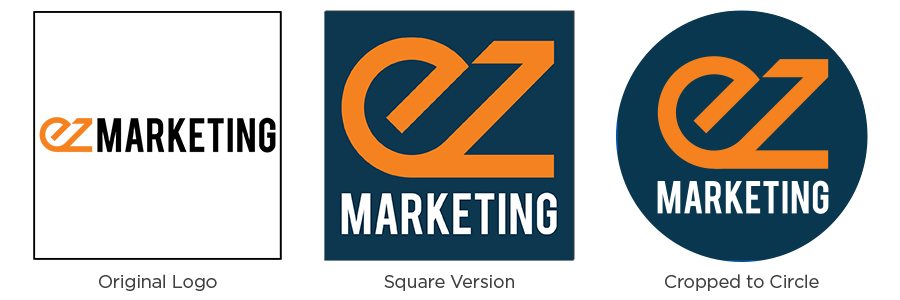
Currently, profile pictures display at 170×170 pixels on desktop and 128×128 pixels on mobile. That’s not big to start with, but it gets even smaller on posts and comments. A square image works best, but remember, Facebook will crop it to a circle on posts and comments. If your logo is long horizontally (like ours is), you may want to adapt it, so it’s legible on Facebook.

Logo Comparison_blue

Note: Facebook changes photo dimensions all the time. Double-check their help section for the latest info.

3. Create Your Custom URL

When you’re sharing your Facebook page address with your customers, which would you rather give them:

     facebook.com/pages/yourcompany/2960133610752

or

     facebook.com/yourcompany

A custom URL, or vanity URL, enhances the branding and professionalism of your business page. Plus, it’s a lot easier to share.

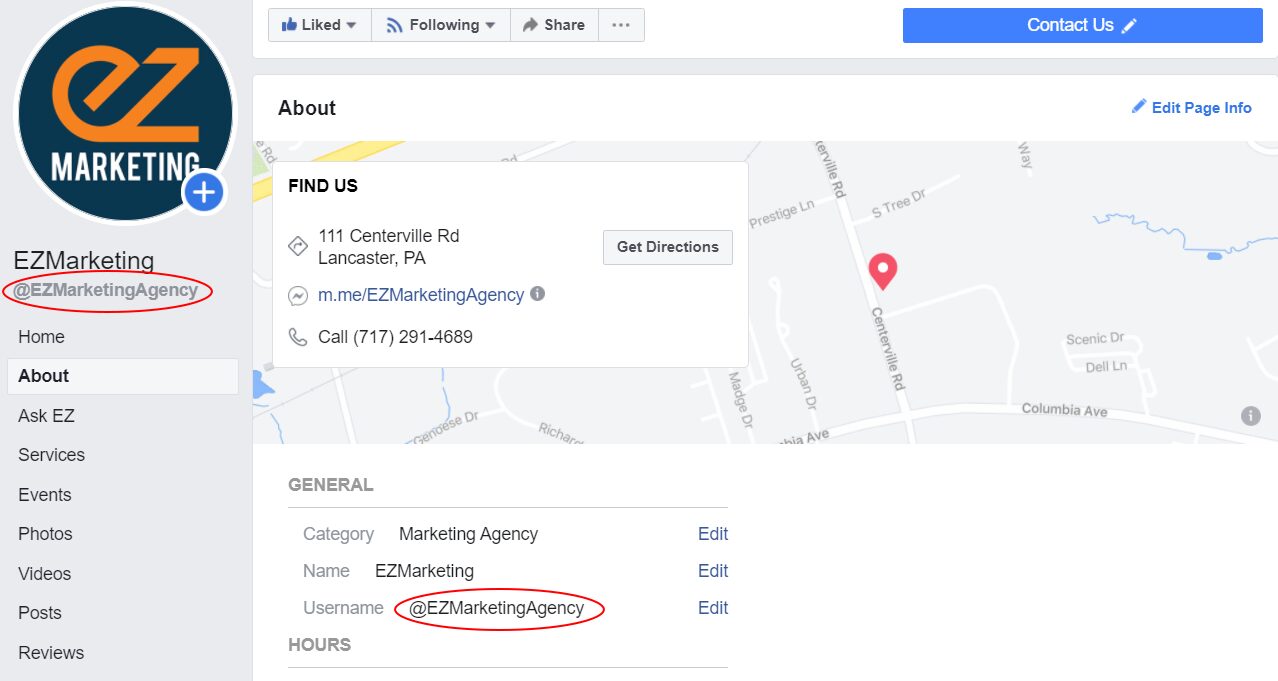
To change the URL for your business, you must create a username for your Page. On your Business Page, go to About and look for Username to set or change your page’s username. Try to keep it as close as possible to your business’s name without duplicating a username someone else is already using.

Facebook-username

4. Create an Attention-Grabbing Cover Image

Dominating the top of your Facebook page, your cover image is one of your simplest tools to make your Business Page stand out. Choose high-quality imagery that makes an impact with your audience. Generally something with white space that’s not too busy works best. Use text judiciously to add emphasis and drive engagement, without filling your cover with words. You can even use your cover photo to emphasize the buttons directly below, encouraging users to follow your page or contact you.

This cover photo from Good Goat Milk Co. has a nice mix of imagery and text that highlights the benefits of the product and naturally encourages people to click on the Shop Now call to action.

Facebook automatically crops your larger desktop cover photo when viewed on mobile devices. The problem is that they chop off a good portion of the left and right sides. So your cover photo may look great on your computer, but if you have a key element or text too close to the edges, it may get cut off on mobile.

Here are two easy ways to avoid this:

  1. Keep any text closer to the center and away from the left and right edges of the photo
  2. Design your image to be taller than the recommended 820×312 size. (One source recommends 820×461 pixels). You can position your desktop cover photo to center the image. Then it will display without cutting anything off on mobile.

5. Add a Call to Action Button

As we mentioned before, one of the great things you can do with your cover photo is draw attention to the buttons immediately below. One of those buttons is a custom call to action so you can tell your Facebook visitors what you want them to do next. That can be visiting your website, sending you a chat message, booking an appointment, making a purchase or donation, and much more.

To add a button, log in to your Business Page and look for +Add a Button below your cover Photo. Select which button type you want and follow the instructions to add it to your page.

6. Complete Your About Section

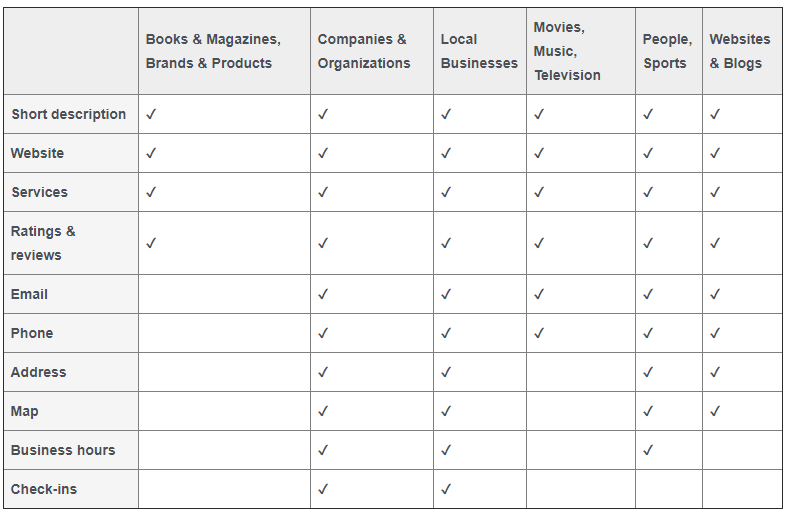
Like your website, many people visit your Facebook page looking for information about your business. Create the best impression possible by completing the About section of your Business profile. Depending on what category of Business Page you created, different features will be available.

In general, make sure you describe what your business is all about and include contact information so people can reach you easily. If you have a physical location, include a map and business hours too.

7. Customize and Prioritize Your Page Tabs

Your Facebook Business Page is a highly customizable tool that can be extremely powerful.

All Business Pages start with standard tabs like About, Photos and Posts, but you can add custom tabs to create an even more engaging experience. You can run contests or polls, provide special offers, capture leads, and much more. Facebook also integrates with a ton of 3rd party apps, which provide even more options – like all these useful Facebook Page apps.

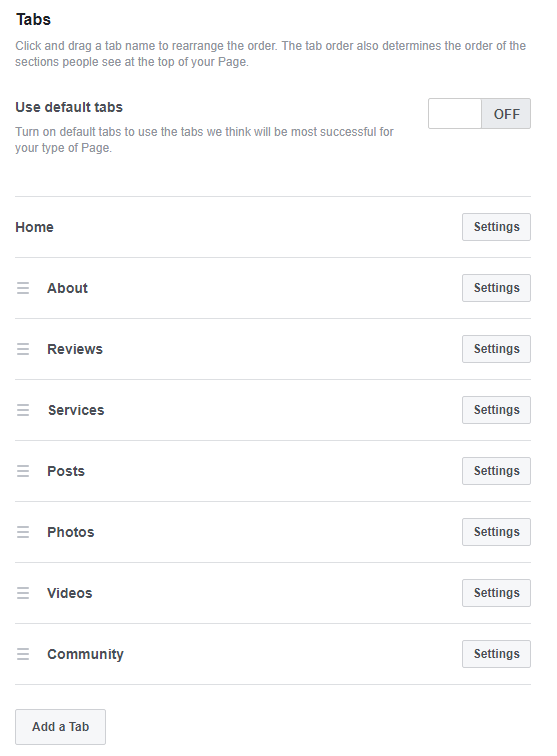
You can also re-arrange tabs to highlight your most important content first. All your tabs will display on the left-hand sidebar of your page, but the tab order determines the order of sections in your Page’s timeline. Do you want your posts to show first, or do you want to highlight your reviews, or maybe your videos? It’s completely up to you.

To manage your tabs, click Settings in the upper-right of your page manager. Then click Edit Page. You’ll see a list of all the tabs on your page. From here, you can rearrange the existing tabs or add new ones.

8. Pin Important Posts

Another way to draw attention to important information is to pin your key posts to the top of your page. That way you can keep critical announcements, current offers, and special events highlighted at the top of your timeline. Just make sure to keep your pinned content current and swap it out regularly.

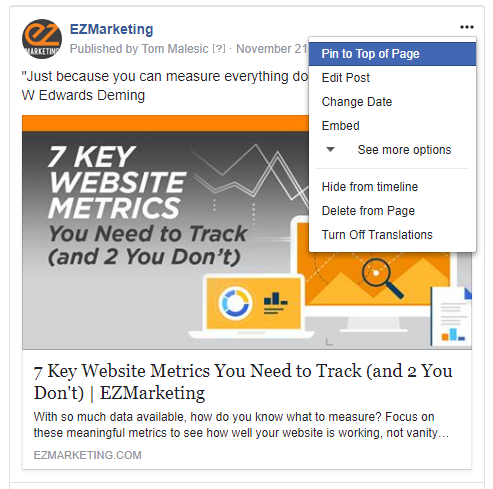
To pin a post, click the three dots in the upper right corner of the post and click “Pin to Top of Page.”

9. Respond to Messages

Messaging and live chat are becoming an increasingly popular way for your customers to reach your business. Over 60 million businesses use Facebook Messenger, sending more than 2 billion messages back and forth with users each month.

Despite this, many businesses fail to respond to customer inquiries on their Facebook pages – or at least, they don’t respond quickly enough. Think of Facebook Messenger as an alternative to phone-based customer support. When someone calls into your business, first and foremost, they expect someone to answer. Second, they expect to be able to get help and speak to someone quickly. They don’t want to get stuck on hold forever.

Treat messaging the same way. Monitor your Facebook pages and respond to messages consistently and promptly. If you reply to 90% of messages within 15 minutes, you can even earn a “Very responsive” badge for your Page. This lets your visitors know that they can expect great service from your page and makes them more likely to message you.

To help with this, Facebook provides automated response assistance, which can provide greeting messages, instant replies and reminders. Within your Page Manager, go to Settings –> Messaging to change these options. You can also download the Pages Manager App on your phone to get mobile notifications when new messages come in.

For more advanced automation, consider adding a chatbot to your Business Page. Messaging platforms like MobileMonkey allow you to manage chat from your website, Facebook, Instagram, and more—all in one place. MobileMonkey also has a great article with even more Facebook business tips.

Your Turn

Even if you already have a great Facebook Business Page, it’s always worth a second look. Facebook is constantly changing and adding features, so it’s important to review your Facebook Page regularly. Have any other tips to share? Leave us a comment on our Facebook page!

If you find you just don’t have the time to manage your Facebook business page, keep in mind we offer Facebook marketing services to help simplify your life.

Start A Conversation 

Read more

The One Reason Your Content Marketing is Failing

Nearly all businesses today are doing some form of content marketing – 91% according to the most recent industry study. Despite that, many marketers are still not seeing the results they want from their efforts. They write blogs, but no one reads them. They send out emails, but no one opens them. No one will like their Facebook page or follow  them on LinkedIn.

Maybe that sounds familiar. But with 79% of marketers saying they’re seeing success from content marketing, what are you missing? Why is your content marketing failing?

The answer: strategy. Specifically, a documented content marketing strategy.

Strategy Supports Success

Sometimes, content marketing can seem like a hungry beast – one that constantly needs to be fed. When you’re struggling to keep up a weekly blog, or regular social posts, it’s hard to stop and think about strategy. It’s no surprise that many small businesses (who often only have tiny or one-person marketing teams), end up doing random acts of content. They focus on feeding the beast, one blog-post morsel at a time, rather than figuring out a long-term strategy.

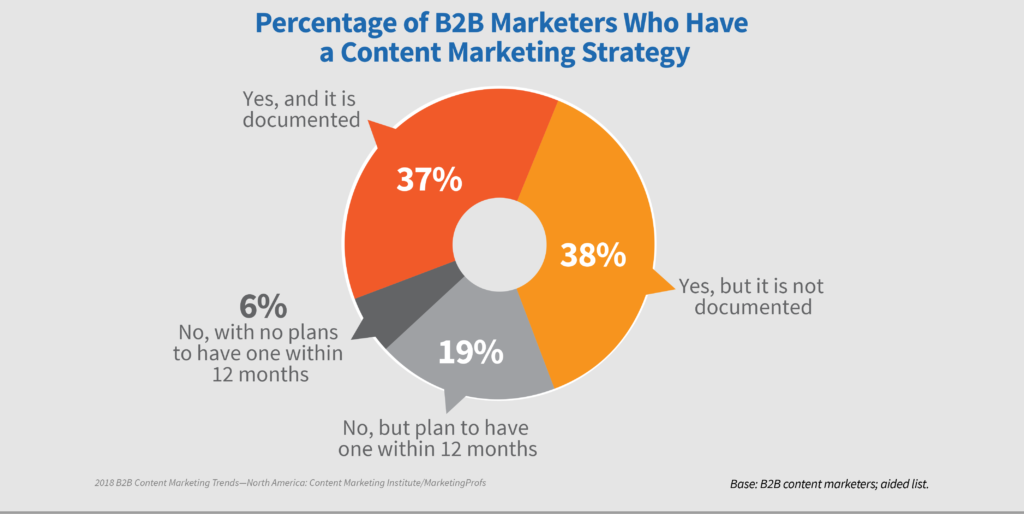
Studies have proven, year after year, that a documented content marketing strategy is critical to success. Only 37% of B2B marketers have a documented strategy, yet 62% of the top performers have invested in one. What’s more, 72% of respondents said that strategy contributed to increased content marketing success over the last year.


Why Do You Need A Documented Content Marketing Strategy?

First, note the word documented. You need to write it down, otherwise it’s just nice ideas. The process of getting a strategy down on paper will help create alignment in your organization. Plus it’s harder to forget something in writing.

But why do you need a strategy to begin with? Here are a few reasons:

You Need to Be Remarkable

There’s a lot of content out there. Every month, WordPress users alone produce nearly 82 million blog posts. Every minute, people send 156 million emails and view  4.1 million YouTube videos.

Whatever you want to say has already been said. Probably many times over.

Your job is to bring your unique story and perspective to the content. You need to answer the question: why should anyone care?

Rand Fishkin of Moz tackles the question by talking about 10x content: the idea that in a world overloaded by content, producing “good” content isn’t enough anymore. You need to create something that’s 10 times better than everyone else.

As Fishkin points out, however, you don’t just do this by accident. 10x content requires planning, research and time to succeed. It needs strategy. Otherwise you are just like one small fish in an enormous ocean.

You Need to Be Radically Relevant to Your Customers

We don’t just produce a ton of content. We also consume a ton of content. Remember those 82 million blog posts per month? WordPress also reports that people view more than 21.3 billion pages per month. So it’s not that your customers aren’t consuming content. They just might not be consuming your content.

The problem is relevance.

Too many businesses mistakenly assume that if they just create content, their potential customers will immediately see it, love it, and hand over their money. Unfortunately for all of us, it doesn’t work like that. Unless you give your customers a compelling reason to pay attention to your content, they’ll ignore you in favor of a more timely answer, a more in-depth resource, or a funny cat video.

You need to earn the attention of your customers by being hyper-relevant. That’s where your content marketing strategy comes into play. You need to research your target audience so you’re deeply in tune with what they need and how you can answer their questions. By learning where they hang out and how they consume content, you can also plan the appropriate content tactics to reach them in the right place at the right time.

Your Content is Tied to Your Other Marketing Efforts

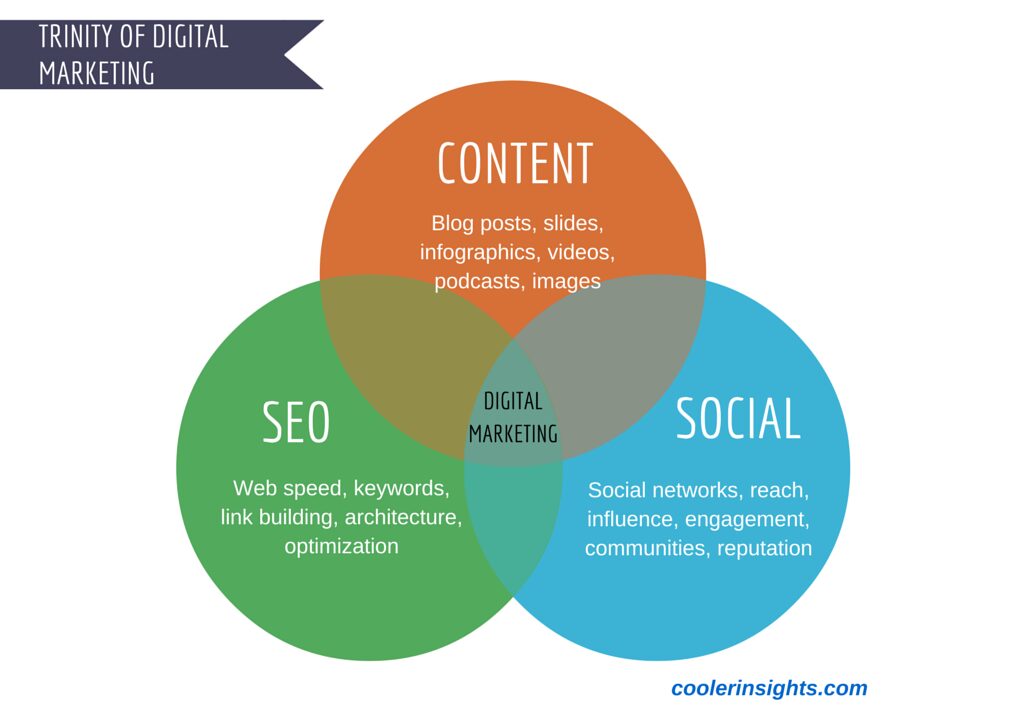
Having a solid content marketing strategy isn’t just about doing content right. It’s about doing all of your marketing right. Content is the substance of message – the stuff your business’s story is made of. You can’t do marketing without content.

Furthermore, content is becoming more and more intertwined with SEO. In fact, it’s now one of Google’s top ranking factors. Google looks for well-written, highly relevant, long-form content when ranking your website. Waxing eloquent about your products and services isn’t enough anymore (because no one wants to read it). You need content that engages and informs your audience. Not only will it rank better, but it will also attract valuable backlinks to your website.

Social media is also driven by content. You use social media to connect and engage with your customers, but content gives you the substance to share and start the conversation. Again, you can’t have a conversation when you only talk about yourself, so you need relevant, non-promotional content.

In both cases, success comes back to having a solid, documented content marketing strategy. Optimized content for SEO and consistent engagement on social media doesn’t happen by accident.

You Need to Know Whether It’s Working

Documenting a content strategy means that you are establishing clear goals for your content, as well as a way to measure them. Without a strategy, it’s easy to fall into the trap of random acts of content that you can’t relate to your business objectives.

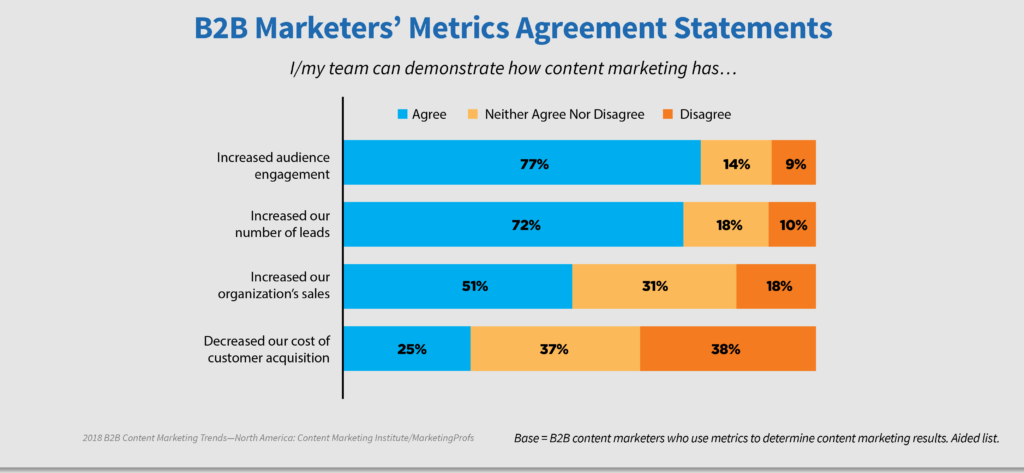
Only 35% of businesses measure the ROI of their content marketing, but those that do have metrics in place typically have positive results to share. 77% reported increased audience engagement, and 72% said they get more leads.

A documented content strategy gives you a roadmap for success so you can identify what’s working and what needs to be improved.

Start Building Your Strategy

If you don’t have documented content marketing strategy, it’s never too late to start! We’ve got multiple resources to help you on your way. First, check out the recording of our recent seminar: How to Transform Your Business with Content Marketing, download our e-book below, or contact us learn more about our expert content marketing services.

Download free e-book - Content Marketing 101

Read more

10 Benefits Of Business Blogging

Blogging has been around since the beginning of the internet, but a lot of businesses still aren’t doing it. Either they don’t understand it, think it’s not worth their time, or they don’t have the resources to do it themselves.

If you’re not blogging by now, you’re not just behind the times, you’re in danger of extinction.  This year, a majority of marketers rated blog content creation as a top priority, according to Hubspot. Why? Blogging offers a ton of benefits to your business that you don’t want to miss out on.

Read more

Facebook Ads – Are They For You?

Facebook is like the social media elephant in the living room: it’s too big to ignore.  According to Social Media Examiner’s latest report, a commanding 93% of social marketers regularly use Facebook ads. Despite this, marketers are often unsure if their Facebook efforts are effective or not. When considering how to spend their precious advertising dollars, many businesses are still asking if Facebook ads are a good fit. Here are a few questions and common objections that will help you decide if you should be doing Facebook ads.

Are your customers on Facebook?

This is an objection we hear mostly from B2B businesses. “Facebook is great for B2C,” they say, “but my customers just aren’t on Facebook.” Is that really true?

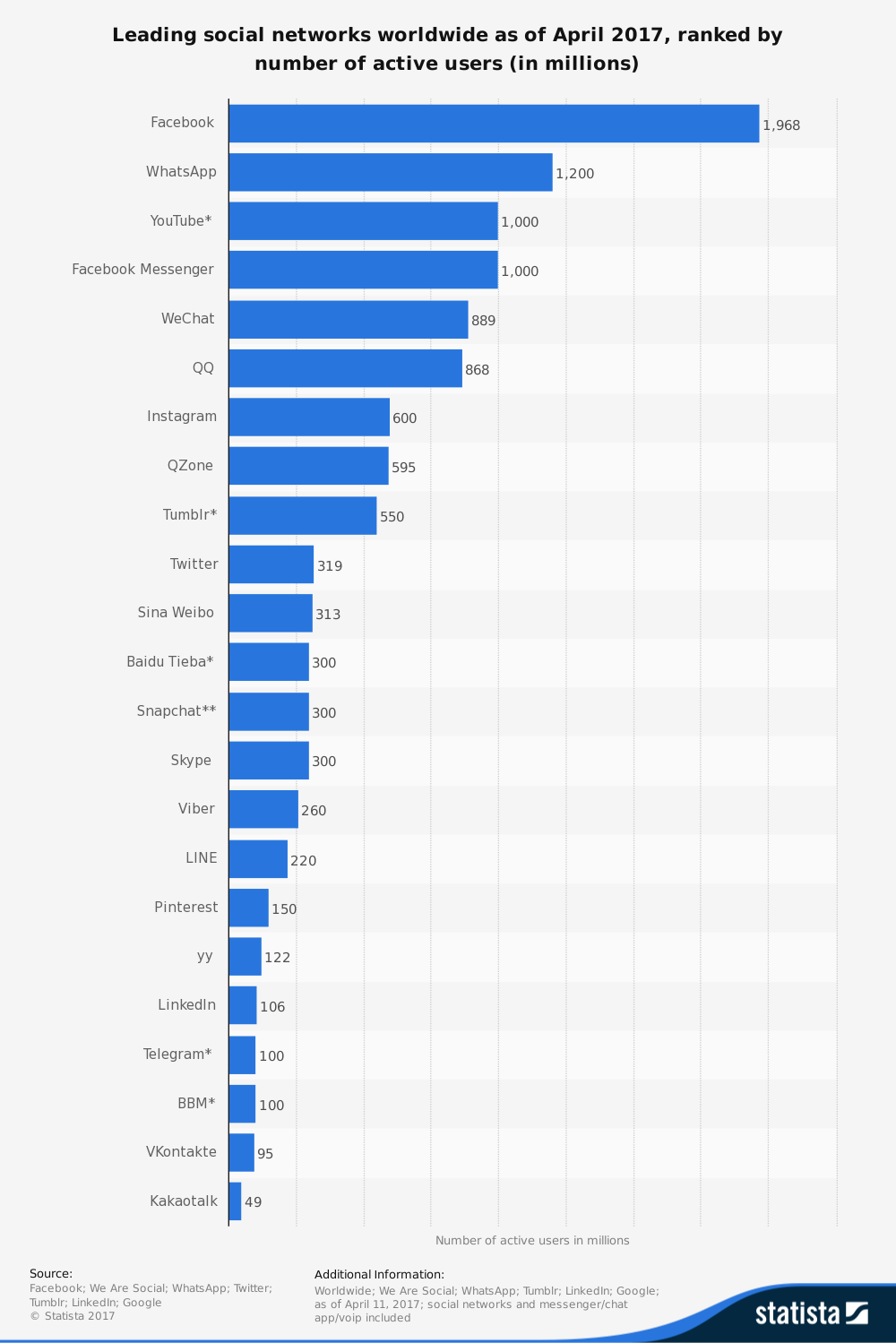
As of Q1 2017, there are 1.9 billion monthly active users on Facebook. Think about that for a minute. There are only about 3.7 billion Internet users worldwide, which means more than half of them are on Facebook. This number dwarfs the user count for any other social media platform. As you can see from the chart below, some of the closest competitors include WhatsApp and Facebook Messenger, both Facebook products.

https://www.statista.com/statistics/272014/global-social-networks-ranked-by-number-of-users/

Not only is Facebook’s audience huge, it’s also highly active. The company reported that users spend an average of 50 minutes per day on their apps (Facebook, Messenger and Instagram). When you think about people’s fragmented attention spans, that’s an enormous amount of time. In fact, Facebook accounts for one in every six minutes spent online.

With an audience that big and that active, it’s hard to believe that your customers just aren’t on the platform. Statistically speaking, unless you have an unusually niche audience who hates the Internet, your audience is probably on Facebook.

Can you reach your specific audience?

The great thing about Facebook is its astounding 1.9 billion users. The problem is that 1.9 billion is a pretty big haystack when your audience is a much smaller pile of needles. Thankfully, Facebook has highly advanced targeting capabilities so you can really hone in on your precise target audience.

Through partnerships with big data companies, Facebook provides sophisticated targeting that goes well beyond standard demographic and geographic criteria. You can reach audiences based on life events like getting married, having a baby or getting a new job. You can also target based on people’s behaviors, like buying a new car, travelling frequently or donating to charitable causes.

View the full infographic here.

Even better, Facebook allows you to create Custom Audiences based on people who have visited your website, or email and phone lists that you already have in your database. Layer in demographics like age, job function or geographic location to get hyper-focused. You can also use Custom Audiences to send retargeted messages to people who already know you, which helps increase conversions. Lastly, Facebook can create Lookalike audiences that have similar traits to your custom audience, allowing you to reach more people just like your Custom Audience.

Remember, there are great options here for B2B too. You can target based on job title, employer, company size, industry and more. The behavioral filters also let you narrow by business purchasing behavior, such as people who have purchased business repair/maintenance services. Of course, Custom and Lookalike audiences are a powerful tool for B2B as well as B2C.

Can you afford Facebook ads?

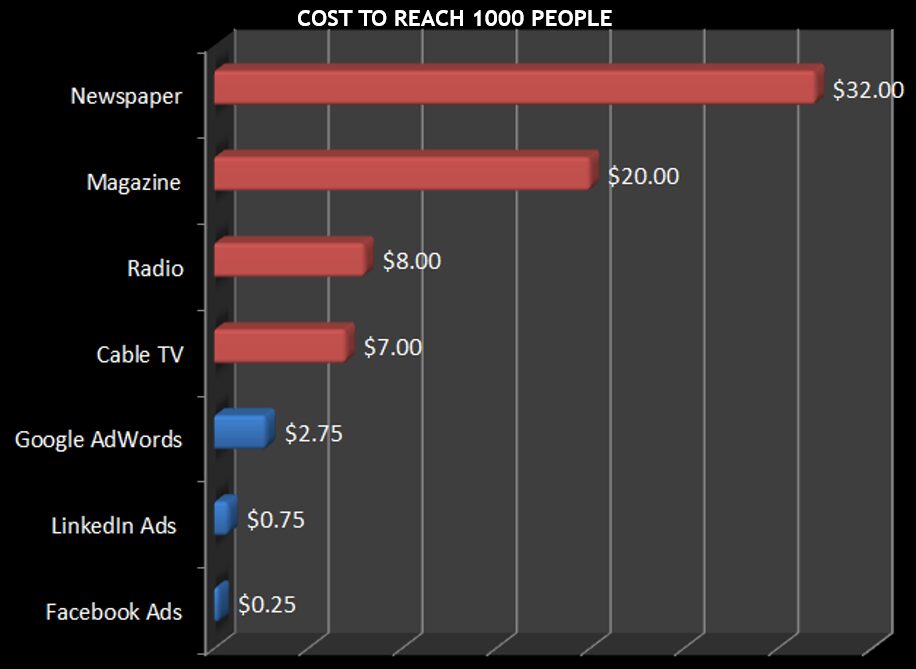
Budget is always a factor as businesses debate how to best spend their advertising dollars. Facebook ads are a popular choice in part because they are so affordable.

The average cost per click (CPC) for Facebook ads in the U.S. is about $0.28.  This is significantly lower than the average CPC for Google search or display ads, which are $2.32 or $0.58, respectively.

Compared to other advertising methods, Facebook provides an immense opportunity at an extremely affordable price. In fact, the minimum ad spend on Facebook is just $1 per day. A recent blog article from Moz makes the case for Facebook ads, showing how just $1 can get your business in front of 4,000 people per day.

Of course, many businesses will want to invest more than $1 per day in order to drive more significant results. Regardless, as the author says, “If you can’t spare $30 a month, you shouldn’t be in business.”

Do you really need them?

If you already have a great Facebook business page with tons of followers and engaging posts, maybe you’re thinking you don’t need Facebook ads. Or, perhaps you’re investing in other social channels and don’t want to add Facebook into the mix. Think again.

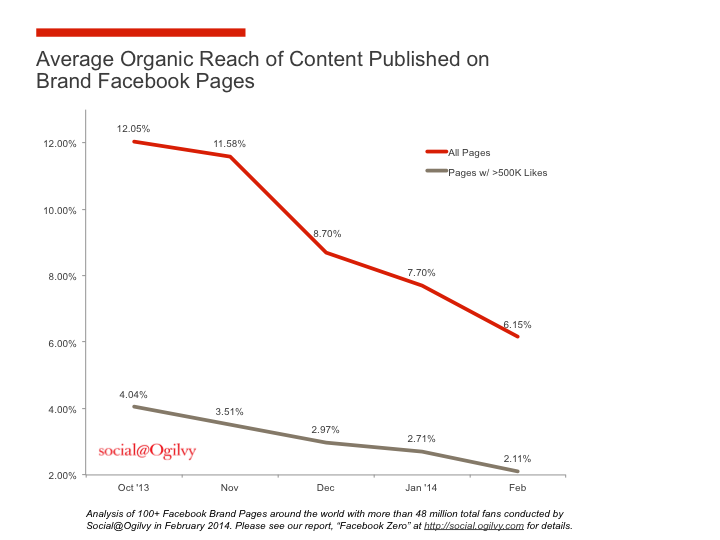
Facebook has become notoriously “pay to play,” with organic reach plummeting to as low as 2% and continuing to drop. Businesses can no longer count on only regular posts on their business pages to reach their audience. Like it or not, paid promotion is now a necessity to drive results on Facebook.

If you don’t like “pay to play,” why not avoid Facebook entirely? The problem is that Facebook is the gateway to the ever-growing mobile audience. Facebook boasts 1.5 billion mobile users, of whom almost 900,000 log in exclusively via mobile. This gives Facebook one of the largest mobile-exclusive audiences in the world. So if your customers are browsing on mobile, you should definitely be considering Facebook ads.

Do Facebook ads work?

This is the ongoing debate. Despite the number of businesses who use Facebook ads, many don’t feel like their ads are working. There are a variety of reasons for this.

Remember that Facebook is a social network, and advertising there is fundamentally different than AdWords. People aren’t on Facebook to buy your products or download your new e-book. They’re there to see photos from friends,  to keep up with news, to share what’s important to them. Bottom line: they’re not necessarily in a buying mood.

So what does that mean for  you? First, make sure your approach is focused on promoting content that is truly compelling, entertaining, or shareable, not just pushing your sales message. Your message needs to be highly compelling and highly clickable to compete with funny cat videos.

Second, make sure your goals are realistic. If you have an e-commerce business, direct sales ads may work for you. For many others, Facebook is more effective for uses like brand awareness, engagement or lead generation.

Lastly, many Facebook ads fail because they are not properly targeted. Facebook has such immensely powerful targeting capabilities, they’re almost creepy. (If you don’t believe me, check out this example of a guy who used Facebook ads to prank his roommate). Make sure you’re taking advantage of these powerful tools.

Implemented correctly, Facebook ads can be extremely successful and highly cost effective. Facebook has a ton of case studies to prove it.

Wrap up: should you advertise on Facebook?

Simple answer: probably. Even if Facebook isn’t a core part of your business strategy, it offers enormous potential benefits with an extremely low cost of entry. Of course, there are always variables an exceptions to the rule, but overall if you can spend a couple dollars a day to leverage an audience of billions to get in front of your precise targeted audience, why wouldn’t you?

Next Steps

Need help getting started? We’d be happy to sit down with you for a free no-risk, no-obligation Facebook review.

Schedule your FREE Facebook Audit, which includes:

  • Review of your current Facebook business page
  • Suggestions to improve your posting strategy
  • Review of your current ad strategy (budget, targeting, content, etc)
  • Research of potential target audiences & reachStart A Conversation

Read more