Blog


Tactics for Tracking Your Marketing ROI


What’s the return on investment of a phone call? A form fill? An email click-through? In the age of data, using tracking tools to monitor and record your lead sources and determine the dollar value of every conversion—that is, every action a prospect takes—is easier than ever. Let’s take a look at some of the things you should be measuring, and how to track them.

Phone call tracking

i0q6

When someone calls your business, it stands to reason that they found your number somehow, whether through word of mouth, a Google search, eventhe Yellow Pages (yes, they still exist). Determining how they found you is a critical step in determining whether the marketing effort you employed that ultimately resulted in the lead was worth your money.

Using a unique phone number for each campaign—PPC marketing, email, billboards, your website design—allows call tracking software to determine where your leads are coming from. This allows you to ramp up or dial down campaigns as needed and focus your valuable marketing budget where you know it’ll have the greatest impact.

Custom link tracking

Custom URL parameters are an incredibly easy way to track the success of everything from your direct mail pieces to your social media campaigns. If the term “custom URL parameters” scares you, take a breath—it’s not nearly as difficult as it sounds.

When you integrate your site with Google Analytics, you create the rules by which your data is tracked. In doing so, you’re able to effectively monitor the lead sources of traffic to specific pages of your website, including direct traffic, search engines, referring sites, social media leads, and more. Again, when you learn the channels that drive targeted traffic, and measure which of those leads convert over time, you’re able to put more money and effort into the campaigns that work best for you.

Unique landing pages

When you run an ad campaign, where are you attempting to drive traffic? Sure, you want visitors to go to your www., but unique landing pages for each campaign allows you to do a couple great things.

First, it allows you to track your lead sources (which at this point, should be a given). But it also allows you to create highly targeted messaging leading to a call to action. Special offers, coupons, and discounts on your landing pages may result in increased conversions. As Unbounce says, “Targeted promotion or product specific landing pages are focused on a single objective that matches the intent of the ad that your visitors clicked on to reach your page.”

Custom forms


We’re not going to say that every page of your website needs a form, but if we’re being realistic about conversions, most should. Long gone are the days when a simple email address to contact was the best way to 

p1a37

solicit customer questions and feedback. With contact forms, you can collect data about the type of people who want to know more about your business, and store their IP addresses so that you’ll know when they return.

Form-fills should also factor heavily into your content marketing strategy. Provide value to your customers for free—the only thing they’re required to give you is an email address so that you can keep in touch. (If you’re not using forms as a part of your content marketing strategy, or if you’re not doing any content marketing at all, read up on making this incredibly valuable marketing approach work for you.)

So much data to track

Think about all of your marketing campaigns—email, PPC, direct mail, social media, even billboards or the brochures you might distribute for a special event. Every single person that takes an action as a result of these activities is a data point. When you view them as such, and when you’re confident about the pool of data you’ve gathered, you can ensure that the money you spend on your marketing is invested rather than wasted.

And with a limited marketing budget, every dollar that marks a return on your investment is critical. Our marketing company in Lancaster, PA can help you get your arms around your marketing efforts and track how that investment is paying off for you.


Start A Conversation

Read more

Questions to Ask About PPC

PPC marketing is offered to marketers by the major search engines like Google, Yahoo, and Bing. The most popular search engine to run search ads on is Google since they continue dominate search engine use (although their market share is declining). There are  many ways to utilize PPC marketing effectively, so following is a list of questions to ask about your PPC marketing campaigns.

Before we do, though, it would be beneficial to explain what PPC marketing does. At its most basic, PPC advertising allows business owners to advertise their websites in search engine results and on related websites within the Google Display Network. These ads help drive traffic instantly to specific product or landing pages on your site. You bid against others that are using PPC marketing for the same keywords to determine which advertiser’s ad displays higher on the page.

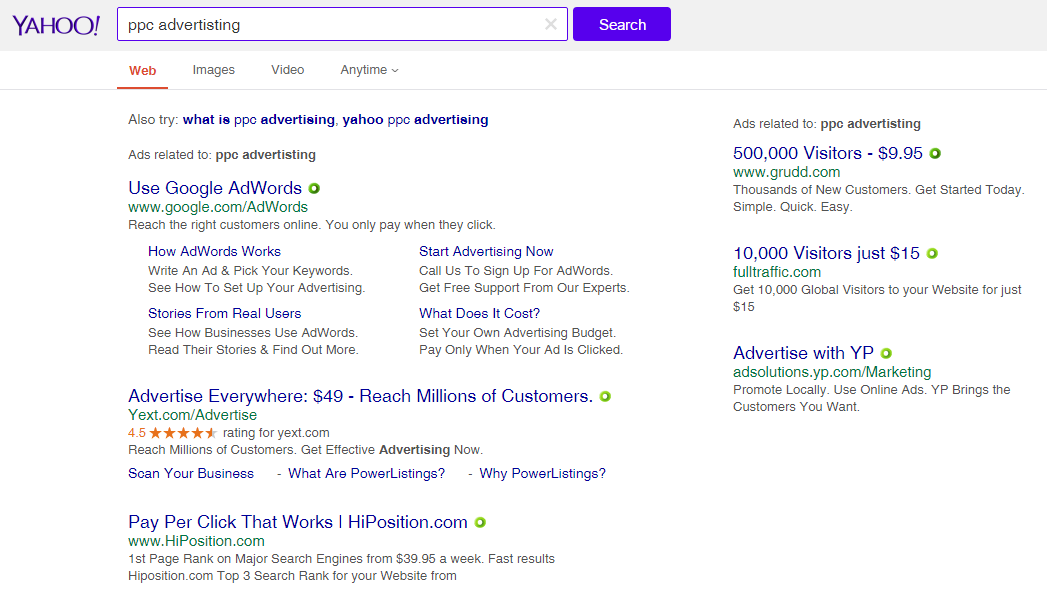
To get an idea of how each search engine display PPC ads, this is how they currently look for the three major search engines:

Google PPC

google ppc

In this example, PPC advertising efforts dominate above the fold. Most search results do not show any organic results until you scroll down, well below paid advertisements. Google currently uses a yellow “Ad” button to clearly indicate  which links are PPC ads, and it displays up to four ads above the organic search results.

Bing PPC

bing ppc

Bing just shows the word “Ad” to the left of the URL, which in this case, is also dominating above the fold with paid results. Bing still shows PPC advertising in the right sidebar, unlike Google, which recently removed its sidebar advertising placements.

Yahoo PPC

yahoo ppc

Yahoo shows ads under “Ads related to:” and also shows them in the right sidebar, similar to Bing. As with the other search engines, searches with enough PPC advertising bids dominate the above-the-fold search results over organic results.

Is PPC marketing a short- or long-term strategy?

Depending on the industry, your business, and your cost per lead, PPC marketing can be a short-term strategy. To create and maintain a successful strategy,  you need the data to have a successful campaign or you could burn through a lot of money very quickly.

To build a successful PPC marketing campaign, you have to determine at what cost you break even and how many products or services you would have to sell to justify an ROI on ad spend. PPC marketing can be a great long-term strategy because you can turn the campaign on and off as you wish.

As for a long-term strategy, ongoing split-testing with more data can further improve the campaign to enhance your ROI month over month.

Outsourced or in-house PPC management?

There are plenty of horror stories of in-house marketers doing PPC management who are not AdWords Certified (Google’s distinction for those who meet rigorous standards to understand PPC marketing campaigns) or simply have no idea what they are doing. You could easily overspend if you aren’t targeting the right keywords, and filtering out negative keywords as they come in as irrelevant search terms. If you don’t have someone in-house that is certified and experienced in AdWords, then it’s probably a better idea to outsource it or hire someone that is well-practiced.

Without an experienced professional, you may end up with a campaign full of low quality scores. Low-quality ads require your bids to be higher than others just to achieve the same placement. You need to have access to make changes to your website content to help increase low quality scores. So if you also don’t have an in-house web developer, then it is likely something you should outsource.

If outsourcing your PPC marketing campaign, ask the vendor if they are AdWords Certified and/or a Google Partner. If they do not have at least one certified team member, you can filter them out as a legitimate agency offering PPC management as a service. Once you have determined their credentials, ask for an estimated budget and cost per click for certain buyer keywords pertaining to your industry. You want to see whether a campaign will bring you the impressions, clicks, and conversions that you need it to within your budget.

Also, based on the products and services you are selling, ask if it is feasible to earn a positive ROI that justifies a PPC marketing campaign. In a competitive market, if you are spending a lot per click but your campaign doesn’t lead to a big enough margin for profit, it’s probably better to spend your money in other marketing channels.

What are some important PPC MARKETING metrics to understand?

  • Quality Score – Gives your ads a score based on quality and relevance, along with the landing page and content that it leads to.
  • Click-Through Rate – Not to be confused with conversion rate, your click-through rate is the ratio of clicks to impressions (or how many times your ad displayed versus how many times it was clicked).
  • Conversion Rate – How often an interaction with your ad leads to a defined conversion on your site.
  • Cost Per Conversion – How much did each one of those conversions cost?
  • ROI – Your return on investment – is the cost of each of those conversions still bringing you a profit?
  • Call Tracking – Outside of a defined conversion, a call tracking number helps you clearly identify calls that are coming directly from your PPC advertising, and not elsewhere online or from your website.

How do you split-test and optimize PPC marketing campaigns?

To really understand the success of your PPC marketing campaigns, try split-testing keywords with three or so ads in a daily rotation. Take notice of what the CTR, or click-through rate, is for each ad. If it’s lower than 1% on all ads, then you should consider switching them out of the campaign for a better-performing ad. It could be that you are targeting the wrong keywords or just that the ads are under-performing.

If there is an ad that has a higher click-through rate than the other ads, then pause the ads that aren’t converting as much so the best ad is always being displayed. This allows you to maximize your budget while you avoid spending on ads that just won’t perform.

If there are keywords getting irrelevant clicks or that have a higher cost-per-lead conversion rate, then pause those ad groups or remove those keywords too. You need to be filtering out negative keywords so that your ads aren’t showing up and being clicked on for irrelevant searches. If you don’t filter out those irrelevant keywords, than users that click on your ads will bounce from your site.  When users don’t find your ads to be helpful or relevant,  you can end up with a low AdRank or quality score… not to mention you will be wasting money.

You could also be spending money on ads in the wrong locations, the wrong days of the week, and even at the wrong times of the day. For example, most restaurants generally would want to spend more on advertising over the weekends and less during the weekdays when business tends to be slower.

You should also be taking advantage of extra features like site links, locations markers, tags, clickable phone numbers, reviews, seller ratings, and social extensions. Missing these extensions can result in sub-optimal click-through rates and a poor performing campaign.

Knowing what to ask

If you put forth the right questions – and know the answers that you should be looking for – when running  or outsourcing a PPC marketing campaign, your results can only improve. So make sure you know what to ask about PPC marketing: what search engines would be the best fit for your business, an estimate on what you can expect to spend to get to the top of the PPC auctions, if you should do it in-house or outsourced, what you need to break even and see a profit, the metrics you should be paying attention to, and how to continuously split test and optimize your campaign with PPC management. The answers to these questions could result in campaigns that generate a huge return on the investment you’ve made with paid search. Have other questions? Get in touch with our Lancaster PPC agency. We offer a complete array of digital marketing services for small businesses.

Read more

Top 10 Productivity Tools for Marketing


The first part of the Tools for Marketers series begins with productivity tools. Productivity is everything for marketing. Any way we can optimize and hack our time for campaigns to achieve the best results is something any marketer strives for. This is why tools for marketers are an imperative part of our daily work for tracking our production.

1. IFTTT

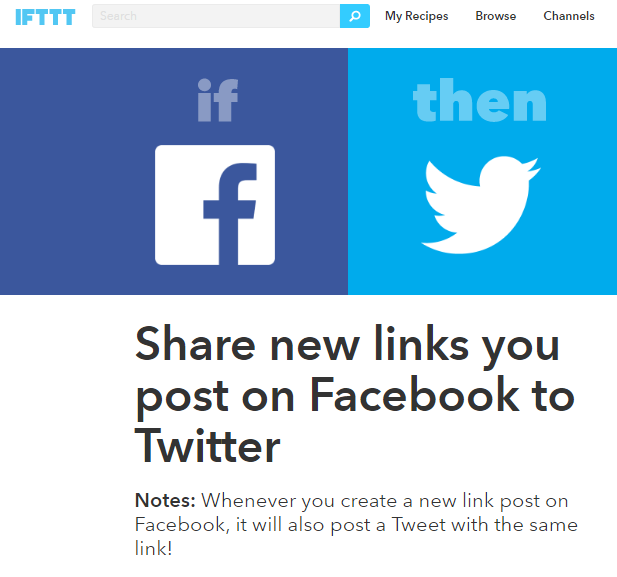
If This Then That is a great way to automate recurring tasks. You setup recipes that connect two of the ever-growing list of apps that triggers a logic for “if this” happens “then that” should happen. For example, you can create a recipe that connects Facebook and Twitter so that whenever you do something specific on Facebook, like share a link, it will also tweet that on Twitter. If you manage a bunch of Facebook pages, IFTTT allows you to choose the specific page you want the actions to trigger for.

ifttt fb to twitter

There are a lot of other ways you can sync social media platforms, like keeping your social profiles consistent by creating a recipe for when you change a Facebook profile picture to also change it on Twitter.

2. Pocket

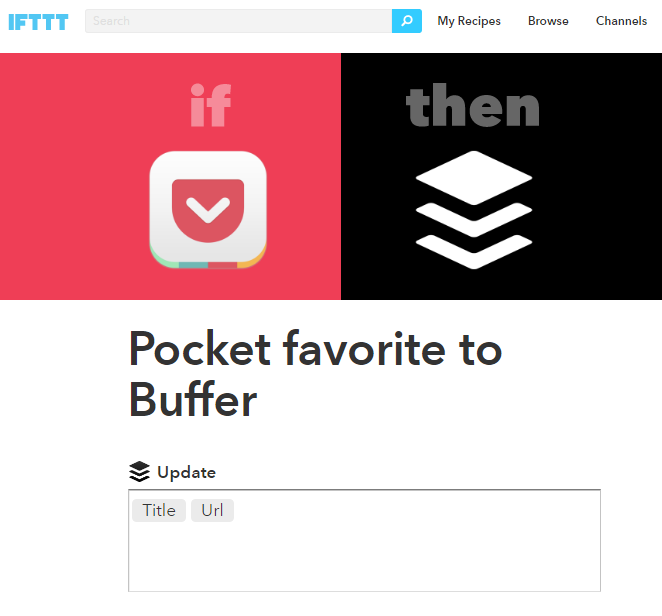
Pocket is a plugin and app that you can easily save an online article to read for later on any device you have Pocket on. So when you are in the middle of something but get an e-mail with blog posts that you know you need to read, you can Pocket them for later. But the real power of Pocket is that it is another app that you can integrate into an IFTTT recipe.

You can connect Pocket to social media platforms to share online, but an even better way is to create a recipe that will take your favorite content from Pocket and add it to your Buffer queue.

pocket to buffer

3. StayFocusd

With the content overload and social media era that we live in, sometimes you can lose your focus online. StayFocusd is a Chrome extension (and they have similar for Firefox users), that you can set to only allow you to be on certain sites that you choose, like social media or shopping sites, for a limited time every day.

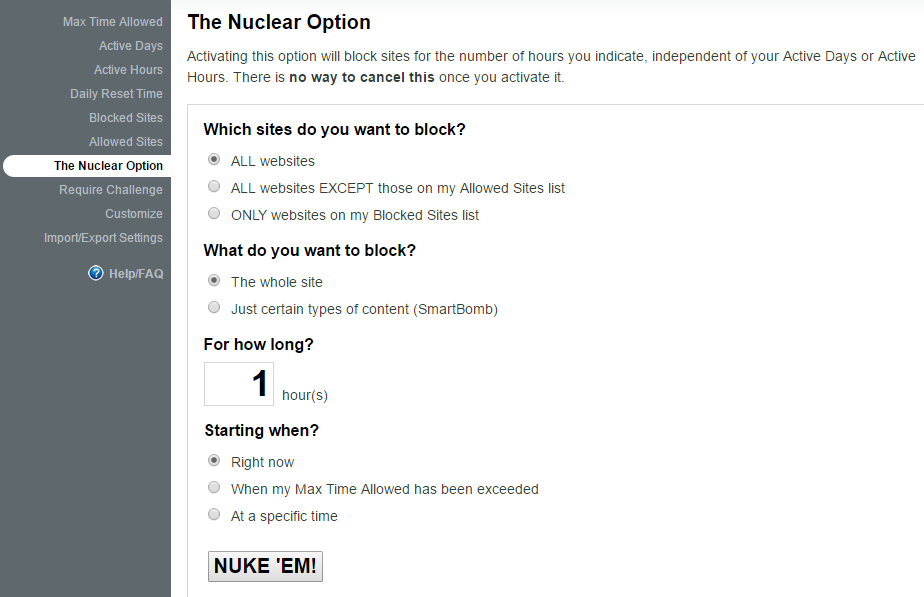
If you really need to finish a project that doesn’t require any research or browsing, they also have a nuclear option that really lets you focus on the project at hand for the length of time you set.

stayfocusd

4. Toggl

Toggl is a desktop application available for Mac, PC and mobile that allows you to track your time more efficiently as you switch between tasks. They also have a Chrome extension that makes it even more easier for you to track tasks on the go, which also works with dozens of apps and sites like Salesforce, Evernote, Asana, Basecamp, Trello, Google Drive, Wunderlist and many more.

You can assign and track tasks for team members, associate costs to time spent, and get a great overview of how you are spending your time on projects and meetings.

toggl

5. Wunderlist

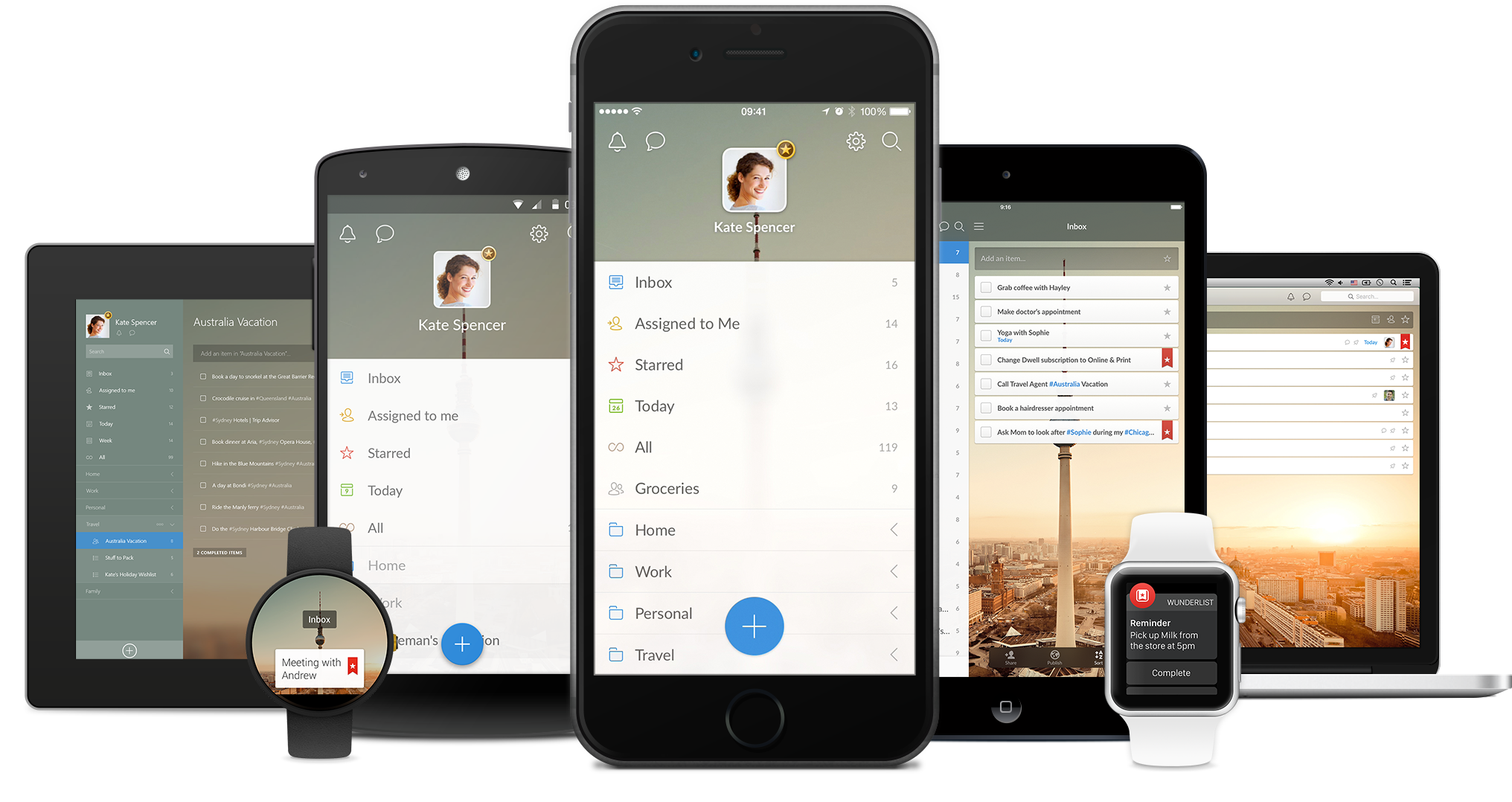
There is a plethora of get-things-done applications out there, but Wunderlist is great for its seamless integration across all of your devices, interacts with other applications like your calendar, and is a great way to brain dump tasks and get them organized and prioritized efficiently.

wunderlist

6. Canva

As humans we are drawn to visuals. As marketers we all need to have the basic capitality of design, whether it’s creating a quick design for a social media post, or it’s adding text overlay to an image.

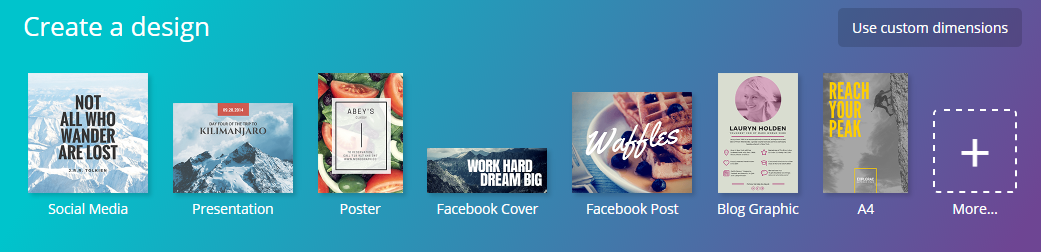
Canva helps by making it easy to find the right resolution for every image for whatever platform you are creating. You can upload images, choose from their library, or buy a stock image, overlay your text, and load it up for social media.

canva

7. LastPass

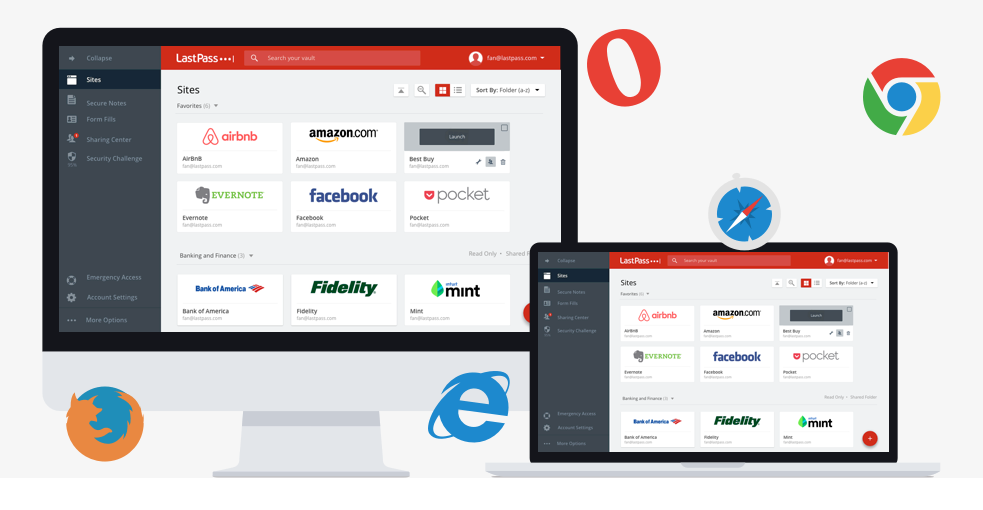
Being able to access your accounts across the internet quickly is important so you aren’t wasting time trying to figure out or recover your passwords. This is especially true if you have a lot of client logins on social media sites. LastPass, while it was breached in 2015, is still one of the best password managers available. With different settings and configurations, you can get into your accounts with ease, or setup new logins with their password generator.

lastpass

8. Evernote

If you’re keeping notes in notepads or textpads, whether in physical form or on  your computer, you’re behind the times. Not just a note taker, Evernote helps to organize thoughts, clip ideas from the internet, automatically save and organize e-mail attachments like receipts, and so much more. It works smoothly across all of your devices for when you have that campaign idea on the go that you need to write down, and also integrates with IFTTT recipes and other apps. This video shows how easy it is to use their Evernote Web Clipper.


9. Rapportive

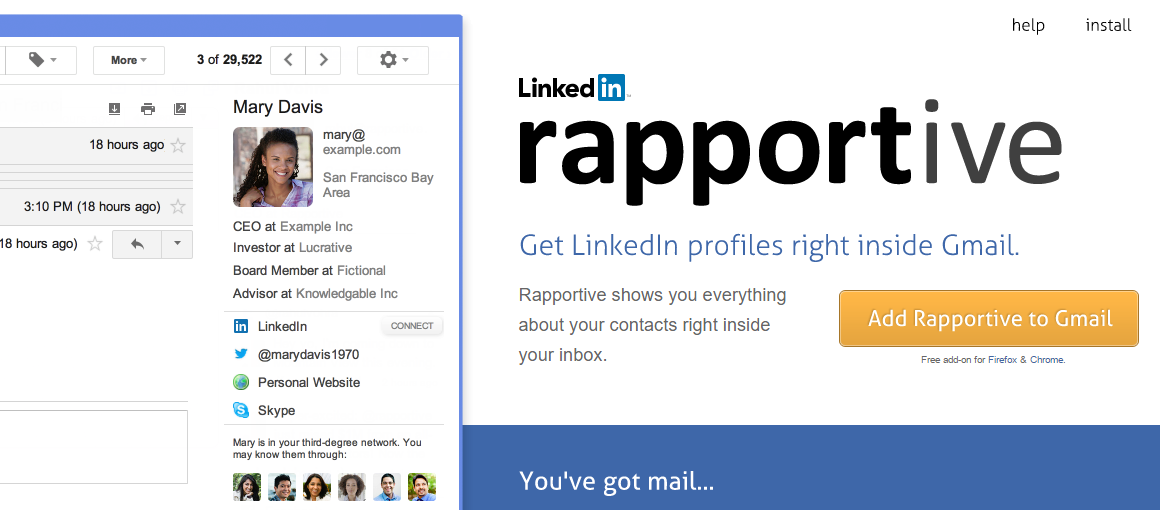
Owned by LinkedIn and with addons for Chrome and Firefox, Rapportive allows you to dig up information on a contact right from Gmail. It will find any mutual LinkedIn connections you have with them, as well as their Twitter, Skype, website, and other contact information so you don’t have to do any digging.

Let’s say you don’t know the person’s email you are trying to reach out to. By putting in different combinations of their email (first initial, last name, full name, first name, last initial, etc.), Rapportive will display their information in the sidebar once you have found the correct email.

rapportive

10. Voila Norbert

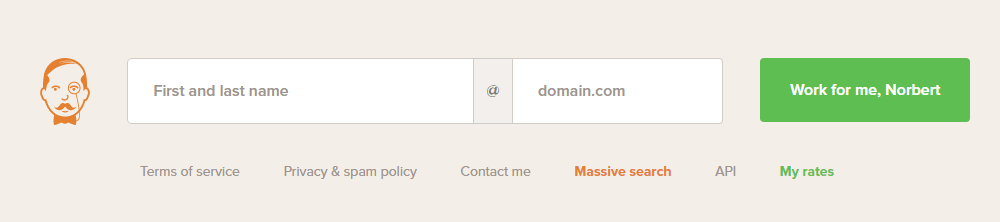
Not knowing someone’s email address that you want to contact can be a daunting research task if it isn’t readily available with a simple Google search. And if the Rapportive trick doesn’t work, or even before you try that method, you should give Voila Norbert a try. All you need to know is the person’s first and last name as well as there domain address. Norbert does the rest and in most cases will bring back their email address. Just run it through mailtester.com first to verify the email is legit.

voila norbert

From automating recurring tasks, forcing your focus on projects, organizing, prioritizing, and tracking tasks to creating images in a breeze, compiling your ideas and finds from the web, and conducting more efficient outreach, these tools can really help you become a more proficient marketer.

We use these (and a lot more) to make sure we are making the most out of our time for ourselves and our clients. So if you feel like your marketing efforts are too daunting, or just need some more digital marketing tips, then sign-up for our weekly emails featuring the latest tips and trending industry news. And if you’re looking for a marketing agency near you, give us a call. Our marketing company has helped small businesses throughout Lancaster, Harrisburg, and York.

Start A Conversation

Read more

Brand Story: A Definitive Guide

 Harland David failed at everything he ever attempted.

  • He failed at school.
  • He failed as a fireman.
  • He failed as a lawyer.
  • He failed at selling life insurance.
  • He failed at selling tires.
  • He failed at manufacturing.
  • He was fired from a dozen jobs.

At age 65, he was left with only a modest savings and $105 a month from Social Security.

But that was the year that he stopped failing. At 65 he began franchising businesses using a special recipe he’d created, and by 73 years old he was able to sell that business for today’s equivalent of $15 million.

$15 million for Harland David Sanders. You know him as Colonel Sanders. His famous recipe, Kentucky Fried Chicken, made him a legend.

Read more

Benefits of Ranking in Google


There is no doubt that Google owns the majority share in the search engine industry. Bing and Yahoo are steadily taking more of that share, and an Apple search engine could do serious damage by having all of their devices default to their own engine. Whatever the case may be in the future, the ranking in Google is currently the most critical for businesses, as the search engine giant owns 70% of the search engine share.

With 3.5 billion search queries per day, your business could garner a lot of website traffic by ranking for keywords related to your business. Given the rise of YouTube, Facebook, Amazon, and more as search engines, just how important is it to rank in Google regarding your SEO?

Ranking on the first page of Google: statistics

Multiple studies have turned out a variety of statistics over the past few years regarding the impact of Google ranking, dealing with factors including:

  • Branded vs. non-branded searches
  • Searches without ads or with ads (ads above and/or beside)
  • Mobile vs. desktop
  • Long-tail keyword searches

When a user performs a search, about 90% of clicks go towards the organic search results, with the remaining 10% to the pay-per-click ads above or beside the organic results. While PPC campaigns are still important in an integrated marketing strategy, ranking organically lets you own those positions and gain more traffic.

This heat map from Mediative shows how most users look past the advertisements to get to organic search results.

search result heat map

Similarly, the percentage of traffic from the first page of Google is about 91%, while only 4% of users click through to the second page or results, 1% to the third page, and then it drops off into fractions of a percent.

google-traffic-by-page-results

This tells us that if you aren’t ranking on the first two pages on Google, the likelihood of you gaining any organic traffic to your website is less than 1%.

Even if you are ranking on the first page of Google, it is obvious that the top results get a higher click-through rate (CTR) than the others. Click-through rate is the number of users that click through to a certain result compared to the rest of the results on the page.

So when it comes to click-through rate on the first page of organic search results, the biggest benefit for ranking in Google is that the first position typically gets about one-third of all clicks, but with many different factors, the results may vary.

This can be backed up by click-through rates of first page organic results in Google.

Click-through rates of first page results

With an ongoing study on CTR by Advanced Web Ranking, which is one of the best keyword tools available, we are able to see results from testing these factors from hundreds of thousands of keyword searches and websites.

So let’s break down the click-through rates for all the different variations of searches with data from the United States.

Overall CTR for all mobile vs. desktop searches

all searches ctr mobile v desktop

Mobile has overtaken desktop as the most-used device for searches on Google, so it is important to have a mobile-friendly website to even be considered for a first-page ranking. In this study, 30% of desktop searches click on the first position, while 27% click on the first position on mobile devices. This could be because on a desktop computer, you can see 6 or 7 results on the page and choose to go with the first, whereas with less landscape on mobile, you only see two or three results and give preference to what seems like the best.

CTR for searches with or without ads

searches with or without ads ctr

When ads are displayed, whether above the organic results or beside them, organic click-through rates take a ten percent hit because users have other options to choose from. This is especially true on mobile where ads are displayed, because they take up the screen before the searcher has to scroll down to organic results.

CTR for branded searches with or without ads

branded searches with or without ads ctr

When someone does a brand search, they are specifically looking for a company that they know, trust, have heard of, or have used before. So there is a much higher likelihood that said brand will show up higher in results, which is why it has the highest CTR of 42 percent among these tests. When ads come into play, it allows for competitors, or even the searched brand itself, to pay for ads that display above organic results and potentially steal traffic from their competition.

CTR for unbranded searches with or without ads

unbranded searches with or without ads ctr

An unbranded search is when a user is looking for a product or service, but they do not know which company they want to use, or they are shopping around for the best prices or features. So it makes sense that there is a bit of a drop with unbranded searches when it comes to unbranded searches, especially when ads are involved. At a 22 percent CTR for the first position of unbranded searches with ads, it is the lowest click-through rate for all of the studies done. If you are doing also doing pay-per-click using Google AdWords, unbranded relevant searches would be the keywords to target, as they are stealing a lot of the traffic from the top organic results.

CTR for branded vs. unbranded desktop searches

branded vs unbranded searches ctr on desktop

A big reason you want to build your brand awareness, loyalty, and trust is so that people begin to search your brand name along with your services or keywords. As you can see, when a branded search is done on desktops, it gets 41 percent of the clicks as opposed to just 26 percent for unbranded searches. However, when it comes to the second position and further down, both searches tend to match when it comes to click-through rate.

CTR for branded vs. unbranded mobile searches

branded vs unbranded searches ctr on mobile

On mobile devices, there isn’t as big of a difference between branded and unbranded searches as there is on desktops – but there is still a difference. Oddly enough, unbranded searches have a higher CTR in positions two through five, and then begin to match up with branded searches.

CTR for long-tail keyword searches on desktop

long tail keyword searches ctr on desktop

Long-tail phrases, which include at least two keywords, pose much more precise intent. Long-tail keywords are less competitive, which makes them easier to rank, and you should consider putting together a very in-depth long-tail keyword list to use in your website copy and content marketing strategy. When searches are done with four or more keywords, they have a slightly higher CTR on desktop than searches done with fewer keywords. But all of them have around a 30 percent CTR on desktops, which is why you should begin to target and track your long-tail keywords.

CTR for long-tail keyword searches on mobilelong tail keyword searches ctr on mobile

When it comes to mobile, long-tail keyword searches tell a slightly different story. While four or more words still get the highest CTR at 32 percent, there is a drastic drop from three keywords to two, and especially to one keyword. One-keyword searches on desktops got a 30 percent CTR, but on mobile they get just a 19 percent CTR.

Calculating your potential traffic

As you can see, there is a huge benefit to ranking on the first page of Google. Your brand awareness will rise, hopefully along with more branded searches, and so will organic traffic to your website.

Let’s say that you ranked for a long-tail keyword that got an estimated 1,000 searches a month. Typically, you would garner about 30 percent of those click-throughs to your website.

1,000 searches a month X .3 CTR = about 300+ more visitors to your website

Now imagine if you started to rank for a combination of different long-tail keywords, or specific buyer keywords for your products and services. You can begin to see how it will add up to a ton of monthly organic traffic to your website, resulting in more leads, sales, and hopefully long-term and loyal customers to your company.

How to get keywords ranking in Google

Without going into too much detail about the entire process that an SEO agency would be able to do, here are some top-level tasks you can do yourself that can help to get your site ranking.

Optimize your website

First and foremost, you want to optimize your website for search engines. This means having a mobile-friendly site with a fast load time and a good user experience. Every page should be optimized with tags and copy, and any issues affecting your website rankings should be addressed.

There are over 200 ranking factors that experts have determined that Google uses. It becomes even more complex, as Google’s Matt Cutts has also stated that some of those ranking factors can have up to 50 different variations.

Therefore, one of the best digital strategies is a content- and data-driven strategy that acquires authoritative links and engages with a social audience.

Your website also needs better copy and a strong customer journey, because without these, users may bounce off of your site and back to the search results where your competition is. If you have a high bounce rate, which is when someone goes to a page and leaves it in under a minute without visiting another page, you should see if your website is making any common website mistakes that are raising your bounce rate.

Keep in mind that the more high-quality content pages you have on your website, the more chances you have to rank. If you have a smaller website with only 10-20 pages, then it will be much harder to steal traffic from your competitors with a larger website presence.

Start producing resourceful content

One easy way to add more relevant pages to your website is to help your visitors find a solution with a resourceful blog. We’ve gone into the benefits of blogging for business before, but essentially, it helps to build your brand and authority, earns trust in your industry, allows you to engage socially by sharing your content across social media networks, and boosts your long-tail rankings  which will drive more traffic – all of which will hopefully travel through your funnel to generate conversions.

The best type of blogging is long-form content, which is content that is generally 1,000-3,000 words.  The average content length ranking on the first page of organic results is typically at least 2,000-2,500 words, as you can see in this chart.

average-content-length-top10

When you create this long-form content, whether it’s an ultimate guide to a service in your industry or a how-to instructional post that walks someone through a problem, you may begin to attract links in your industry through outreach as well as content and social media promotion. With these authoritative and industry relevant links, you will begin to see those content pieces ranking higher, which will result in more organic traffic.

You can use this strategy by looking to see what content your competition has been developing, and create something far better and more valuable. Then you can research who linked to and mentioned them for their content and reach out to them to also get a link. When you can get the same websites that mention your competitors and some more, you should begin to outrank your competitors online.

Other forms of content other than blogging could be creating eBooks, whitepapers, case studies, influencer interviews, videos, infographics, slideshows, and much more.

When it all comes down to it, the main factors in ranking are optimizing your website and earning links, mentions, and shares from your industry. There are are many specific strategies you can use to try and rank online, but sometimes it’s best to worry about your business and leave the rest to the experts when you want your keywords ranking in Google.

SEO strategies CTA

Read more

How Infographics Can Benefit a Digital Marketing Strategy

Google and other major search engines continue to redefine their ranking algorithms, making it harder and harder for brands to create high-quality content that receives links and rank organically. Marketers need to continuously find ways to naturally generate authoritative and relevant links for their content and websites.

When link building becomes more about link earning, the focus needs to shift to creating exceptional and helpful or entertaining content. Bloggers and website owners rarely want to link to something that’s not valuable to their own business or blog. Nor do they want to link to your products or services, since such content is promotional in nature and in most cases doesn’t help their audience. One of the best and most popular ways marketers are creating this standout content is with infographics. An infographic is a visual representation of content and data, presented in an appealing, thought-provoking way.

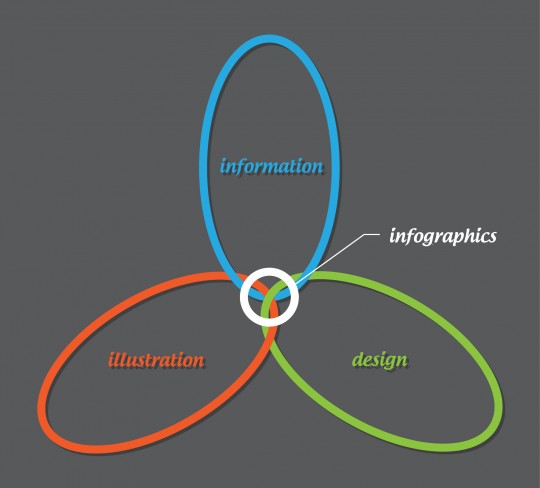
Information, Illustration & Design

From Visually.

Creating truly helpful and visually appealing content is one of the best ways to increase brand awareness, build your audience, aid in lead generation, and improve conversion rates across the board.

Growing brand awareness

You want your brand in front of your target audience, especially those that don’t know you exist. What’s a good way to do that? Infographics work so well on the web because we live in a world of instant gratification. People are more inclined to share visual pieces of informative content because it’s scannable and appealing—giving searchers a solution in the form of a graphic.

Searchers want instant answers. They’ve become accustomed to search engines returning the information they want in a matter of seconds.

When a brand is new online, or hasn’t been using content marketing or SEO, they’re usually not showing up anywhere close to the top of the search results. This means they’re missing the ability to answer the searcher’s problem, and losing the opportunity to turn them into a valuable lead.

Instead of only focusing resources on creating long-form content, no matter how valuable it may be, new brands should also focus on creating easily digestible content.

Infographics can help your content to stand out from the crowd, especially since there is so much noise out there. Your content, whether it be infographics, videos, blog posts, or anything else, needs to be better than whatever already exists online.

You can see from the Google Trends comparison above that searches for content like “white papers” continue to lose popularity, while searches “infographics” steadily rise in its place.

trends

New brands and online businesses can actively benefit from creating and marketing an infographic. Infographics help turn your message into a visual, digital format that’s ideal for sharing. And when people can easily share your content, they help to expose more and more potential customers to your brand.

Increase in organic search traffic and rankings

When you create infographics that help or entertain those in your industry, influencers, bloggers, writers, and journalists in the same niche will share it with their audiences. By doing so, they mention and link to your site to credit the source.

The more authoritative websites in your industry that link to your site help to increase the overall organic rankings of your website. It shows Google and other search engines that authority sites trust your site by linking and mentioning you, and since Google recognizes those sites as authoritative, it passes along that trust with increased rankings for your site’s related keywords. Because, as mentioned before, Google is all about giving the user the most relevant information as quickly as possible when they search it.

For example, when our infographic on the evolution of arcade games went on Wired and other websites, a lot of their keywords related to arcade games all saw an increase in rankings.

Infographics are easy to post on your website by using an embed code that pastes the image onto you a page and includes a link back to the original source. The best kind of link is a contextual link; that is, one where a writer, blogger, editor, or journalist writes a piece and includes a text link to your source. But the easiest kind of backlink for infographics is the one from the embed code, since all that has to be done is to copy and paste the embed code to the site.

Aiding in lead generation

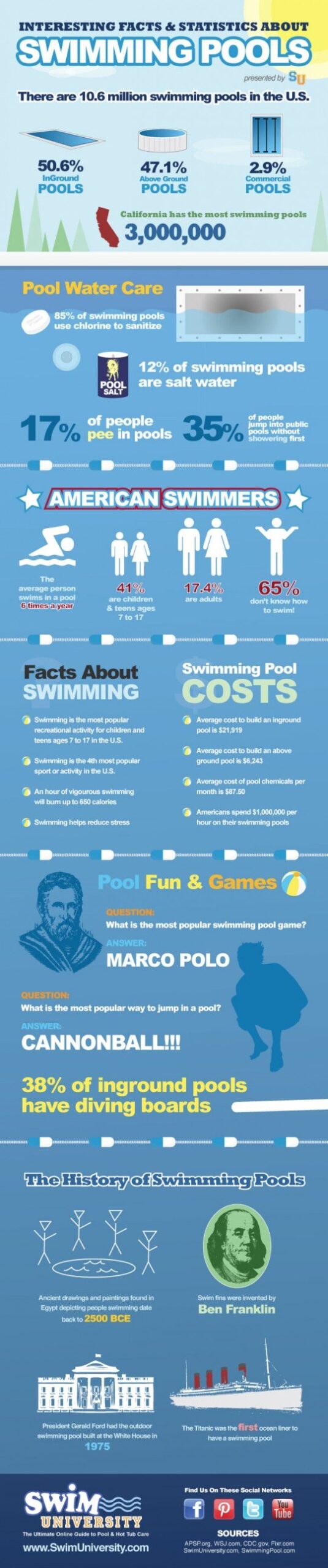
The best marketers know that right content needs to be presented to their potential customers at exactly the right time for every stage of the customer journey. A potential customer beginning to research a big investment, like adding a swimming pool to their backyard, probably isn’t ready for an eBook detailing different pool designs and features. Instead, presenting them with an infographic about interesting swimming pool facts can be the perfect way to expose them to your brand and move them through the sales funnel.

Interesting Facts & Statistics About Swimming Pools
From Visually.

Content like this is at the very top of your funnel and avoids diving right into a sales pitch. When you try to sell a potential customer on your product or service too soon, in most cases, they’re no longer a potential customer (as they weren’t ready to buy yet).

Informative infographics rarely turn potential customers off. They work to give these people entertaining, valuable information while subtly nudging them closer to your brand.

While a good infographic helps to move your potential customer through your sales process, it also works to generate leads in other ways. That customer may have found your infographic so useful that they want to share it with their friends on social media, through email, or maybe even post it on their blog. When your infographic is shared, your brand awareness goes up, and so does your ability to attract new leads to your business.

shared

If your potential customer is finally ready to buy, they’re more likely to go with a company that has helped them with informative and useful content along their journey. Infographics not only help to present information in an appealing way, they also help increase trust with your potential customers. Customers are more likely to buy from a company they trust over someone they’ve never interacted with before.

Improving conversion rate

Now more than ever, gaining the attention of customers online is about earning it. Rather than bombarding potential customers with spam emails, irrelevant offers, and overly “salesy” tactics, you’re allowing them to discover you in their own way.

Infographics aid not only in the discovery of your products and services, but also your ability to convert leads into sales.

Content should be created to fill a need in your industry and/or to entertain, to answer a common problem or concern your customers have in the best way possible. Using an infographic to communicate content is one of the best ways to naturally draw people into your site or blog.

Good content tends to cause a chain reaction: people share your infographic, link to it or embed it on their website, exposing new customers to your brand, gaining links to your site, improving your rankings, leading to more traffic.

“Businesses who market with infographics grow traffic an average of 12% more than those who don’t.”

This chain reaction ultimately leads to increases in traffic to your site from other relevant sites in your industry where your target market is visiting. And, when more people from your target audience are visiting your site, your chances at gaining a conversion are that much better than before.

Few long-form pieces of content have the ability to gain customers’ attention, encourage shares, and increase brand trust as much as infographics. When you take the time to build an infographic with valuable information, you’re filling a void and giving customers exactly what they want. There’s no better way to encourage a conversion and build a strong long-term relationship than that.

For help with defining and creating your overall digital marketing strategy, contact the marketing professionals at EZMarketing today.

Start A Conversation

Read more

Why Your Business Needs a Better Web Presence

When it comes to your business’s web presence, you probably think about how people interact with your website. You may even consider how you show up in Google since they dominate the search engines, but even Google’s search engine market share is declining year after year. In reality, your web presence is so much more than either of these.

Website vs web presence

Your website presence is the one place where your consumers can come to learn information about you and connect with you. This includes your website design and your blog.

Your web presence is the collection of all of the places online where consumers are able to research information about your brand and engage with you. These include social media profiles, review sites, directory listings, microsites, and anywhere else online where your brand is mentioned or profiled.

Importance of search engine presence

As of February of 2016, comScore reports that Google holds 64% of the market and NetMarketShare claims 67% market share when it comes to desktop searches.

comscore-desktop-search-engine-market-share comScore
netmarketshare-search-engine-market-share NetMarketShare

It’s always important to have an organic SEO marketing and content marketing strategy so that your content, products, and services are showing up to solve people’s search queries.

When it comes to mobile, more and more people are performing mobile and tablet searches than desktop. This is why it’s more important than ever, and always will be, that your website is mobile-friendly.

Just like you should track Bing and Yahoo along with Google, you should also track mobile rankings for these search engines – which we do for our clients.

In the big picture of the Internet, search engines aren’t everything  – there is still something missing.

How social media plays a role in web presence

YouTube, Facebook, Twitter – all of these sites are beginning to account for the decline of Google’s search engine market share. Instead of focusing all of your attention on just your Google search engine rankings, maybe it’s time to see how your business and content is displaying on these search engines.

When it comes to Facebook,  you can search right inside the mobile app to find content, never having to leave the app to view the content. This trend will continue, which will hurt website analytics because you are getting visitors from “dark social” that you aren’t able to track on your website.

In terms of displaying ads, you might think that Google is the place to be for mobile ad displays. But you’d be wrong.

According to IHS, Facebook has about 47% ownership of mobile display ad revenue worldwide, while Google comes in at under 24%.

YouTube is considered to be the second biggest search engine there is, with over three billion searches a month and growing.

Created by Mushroom Networks

With YouTube videos showing up on the first page of almost every search result, it’s about time you start creating high quality videos and using them in your marketing strategy.

Future of social media and customer service

A lot of people like to engage with brands through social media, whether they are praising the brand, have a question, or want to make a complaint. Yet about 70% of customer complaints on Twitter are ignored by brands. Because of this, consumers are trying to find a different way to get in touch with businesses.

So, how do brands get more conversational and personal with their customers to handle any questions, comments, and complaints they have quickly and easily?

Social media messaging.

According to a study done by Business Insider, the big four messaging apps (WhatsApp, Facebook Messenger, WeChat, and Viber) have taken over the big four social networks (Twitter, LinkedIn, Facebook, and Instagram) in terms of active users. With the growing popularity of Snapchat, social messaging activity is sure to continue to outpace active users on social networks unless they figure out a way to engage just as quickly, easily, and privately with their consumers.

Not only should you have an active presence on social media sites, but brands need to also be active on these social messaging apps as their customers are clearly favoring them when trying to converse with companies.

Consumers reviewing your business

When performing a Google search about a restaurant, hotel, or other business, you will notice that review sites pop up near the top. Consumers are doing more and more research before buying because of all the content that they can review. Multiple studies have shown that 70-90% of consumers are doing online research before making a buying decision.

research before buy

Consumers are researching on sites like Yelp, Angie’s List, Foursquare, Amazon, and Google Business for reviews before determining where they should give you their money.

When you have a good presence on all of these sites and you’re getting good reviews from the most loyal brand evangelists, sometimes your customers still need to be gently nudged or asked to leave a review.

Your web presence on review sites is a big part of reputation management, which we recently discussed here.

5 Things to Know About Reputation Management

Content is ranking higher than products and services

Organic search results have changed and will continue to change, so we must adapt. Fewer products and services are showing up, with more articles and blog posts taking their place. Years ago, an SEO marketing mindset would want to rank their product pages for search terms like best smartwatch, affordable car, best headphones, and more. What’s showing up now aren’t products – it’s articles and blog posts that provide helpful content to the user in their research phase (after you get passed the paid search results, of course).

best headphones google

best headphones results

affordable car google

affordable car results

best smartwatch google

best smartwatch results

Notice that Apple does not rank at the top for “best smartwatch” (but it does show up as the top paid result).

If you are searching for a restaurant or hotel, Google returns maps, reviews, and travel sites. You have to get to the second or third page until you find a site owned by the restaurant or hotel.

italian restaurants philadelphia Google Search

FireShot Capture 2 - hotels in philadelphia - Google Search_ - https___www.google.com_search

Are you getting your business listed on these review sites? Your competition is, and so should you.

Claiming listings and niche directories

Whether you’ve moved business locations or your directory listings have never been in sync, having a consistent Name, Address and Phone Number (also known as NAP) is very important for your online business. If you have inconsistencies, even just spelling out “West” versus “W.” in some cases, can mean you won’t be showing up in map results that Google is pulling from directory listing sites.

There are many benefits of claiming your directory listings, so it’s extremely important to have a consistent NAP across all of your listings. It’s also important to be listed in listings relevant to your industry and niche as well.

If you are a local business then you need to have a presence on Yelp, Foursquare, and Thumbtack.

For lawyers, you need to be on FindLaw, Avvo, and Lawyers.com. When you look at just about any city search for lawyers, they are on the first page.

Finally, if you sell eCommerce products, look into selling on Etsy, Amazon, and eBay. The chances of beating out competitors for buyer keywords is slim without having to pay for it.

More branded searches

Getting more and more organic traffic from relevant keywords to your business is great. Getting more and more organic traffic from branded relevant keywords is even better.

Do you think it is more important for a travel site to rank for vacation rental keywords and locations, or would they prefer people to search for their travel site and the location? Which ends up converting better?

Take this example: fewer and fewer people are searching for vacation or vacation rentals, while Airbnb gets more and more searches.

airbnb trends

This proves that as your web presence grows, so will your brand and the searches for your business. Do you think that Airbnb wants to rank more for keywords or have more people searching their brand and locations?

airbnb semrush

This chart from SEMrush clearly shows that the bulk of their organic traffic is coming from branded searched terms, which definitely have a higher conversion rate.

Your brand or your competition

So do you want consumers to search for your products and services and find you among your competitors? Or do you want consumers to search for your brand and your products and services because they’ve done their research on your company – and you provided what they needed with a strong web presence? Need help? Talk with our website design company in Lancaster. We can help with SEO marketing, email marketing, as well as website design.

Start A Conversation

Read more

Split Testing for PPC – Increase your Conversions and ROI


A strong PPC advertising message is often the difference between visits to your site and a stale PPC marketing campaign. The tone and content of your PPC advertising is the first thing potential customers are confronted with during their customer journey. Regardless of where they fall into your sales funnel, a PPC ad can either seal the deal or direct them to one of your competitor’s sites instead.

When your advertising message is so crucial to PPC marketing campaign success, how do you make your ads stand out among millions of other advertisers selling the same services? A PPC marketing campaign earning a high number of clicks may appear to be successful, but are your ads converting visitors into buyers?

Whether your ad is a customer’s first touch or part of your sales funnel and process, the message for every displayed ad needs to be targeted.

Split testing your PPC adverstising between each ad group, and even each ad campaign, is one of the easiest ways to optimize your Pay-Per-Click strategy. When you split test ads, you’re pitting similar messages against each other to see which one performs the best.

Split testing extends beyond your ads, though. You can apply this to more than one aspect of your PPC marketing campaign as a strategy to increase conversions, and in turn, increase your ROI.

PPC Ad copy

Optimizing your PPC advertising helps to get your brand’s message in front of the right customer at the right time. When the right message is presented at exactly the right time, a conversion is much more likely. Creating an extraordinary message is what will make your ad stand out from the other advertising noise that is your competition. You need to know your customer and how to meet their needs in 46 characters or less.

ad-length

If your PPC marketing campaign is relatively new, you might not have enough data yet to make ad copy decisions. An important best practice for any online advertising strategy, not just PPC marketing, is to use data to make educated decisions. Data should always be the driving force between any major changes. Without it, your campaign isn’t supported by anything tangible.

ushotair-ad

Once ads have been allowed to run for at least one month, you can begin to analyze their data. PPC management and optimization is all about starting with a broad data set, constantly improving and narrowing the field. When you begin to dial-in on your ideal customer and brand message for your campaign, you increase your odds of success exponentially. Baseline data allows you to see what message customers respond to best, getting rid of ads that fall short before they waste your spend.

The average CTR (click-through rate) for a search ad is 1-2%. Anything over 2% is considered above average.

Look for ads that come as close to a 2% click-through rate as possible. These ads have proven they perform better than others in their ad group, making them the best choice for split testing.

The easiest way to begin split testing is to make subtle changes to your best performing ads. Start by changing the copy or headline of your ad, testing which one is more appealing to your customers. These subtle changes might not seem like they’ll have much of an impact, but you’d be surprised.

j-smucker-ads

You can see from the ads above that changing only the headline message made quite a difference. Adjusting the headline not only improved CTR, it also lowered CPC (cost-per-click). Split testing allows you to find which brand message your customers respond to better. It also allows you to optimize your message by paying less for a click than you would have before.

When more people are clicking your ads and you’re paying less for it, your ROI improves.

Landing page experience

Landing pages work hand-in-hand with your PPC advertising. When you build an ad for your campaign, you also have to decide what page users will be directed to from a click on that ad. These landing pages are displayed as the “destination URL” at the bottom of each search ad. A positive landing page experience is just as important as good ad copy. Landing pages that are well-built and optimized give customers a seamless experience, encouraging conversions.

Think of landing pages as the final push customers need towards completing a conversion. Good PPC ad copy can help get customers to your landing page. If that landing page is confusing, poorly organized, slow to load, or irrelevant, your customer’s journey ends there. Split testing landing page design and messaging is a necessary step towards understanding your customers’ buying journey and how you can work to optimize it.

hubspot-landingpage

In the above example from HubSpot, when landing pages are optimized to continue the ad experience, carrying along their messaging and relevance, leads can increase by over 100%. Split testing landing pages is a bit more involved than testing ad copy, as new pages and designs need to be created on your site. Creating new landing pages for your split tested PPC ads helps you fully understand the customer journey and how they  lead to a conversion, from start to finish.

Working together

Optimizing your Pay-Per-Click marketing strategy is not a one-size-fits-all approach, nor is it a set-it-and-forget-it strategy. Each advertiser is different, with different goals they’re trying to achieve through a PPC marketing campaign. One thing almost every advertiser is concerned about is increasing their conversions, which ultimately helps to increase their ROI for PPC marketing.

When you split test ad copy, you’re bringing your PPC marketing campaign closer and closer in line with your brand’s message. If you ads rarely come close to a 1-2% CTR, your brand message is not meeting the expectation of your customers. Split testing ad copy allows you to pin-point what works and what doesn’t, getting closer to the perfect ad for your target customer.

Adding landing page split testing into the mix allows you to continue the customer journey, controlling exactly how your customers are presented with an offer. Split testing ad copy is a good start, but focusing on other parts of your customer journey, for example landing page optimization, is important too. Rather than dropping off half way through the journey, you’re seeing it through to the end. Presenting users with the right message every step of their journey guides them through your sales funnel, into a lead, then into a valuable customer. When good ad copy works together with an excellent landing page experience, conversions improve for your PPC marketing campaign, and so does your bottom line.

Learn more about split testing, optimizing your landing pages, or Pay-Per-Click in general from our team of Google AdWords certified professionals. We offer a wide variety of internet marketing services for Lancaster, Harrisburg, and York small businesses. 

Read more
Is Your Content Marketing Strategy Working?

One of the core functions of great content marketing is to  have a documented strategy that, when executed, offers solutions to your targets’ problemsWhen they’re presented with a conversion trigger, they’ll be much likelier to take an action. If none of the people who view your content take the next step in the customer journey, you may need to look into changing your content marketing strategy.

A documented marketing strategy is the driving force behind getting your content marketing to produce results that meet your company’s goals. Without market research, tracking, and documented goals, you are just performing tactics haphazardly without really knowing what is working.

Constantly create valuable, resourceful, and entertaining content to make your website visitors, email subscribers, customers, and followers more informed and committed to your brand.  You should do this to gain their trust, which leads them through the customer journey of eventually converting, making a sale, and becoming a loyal long-term customer.

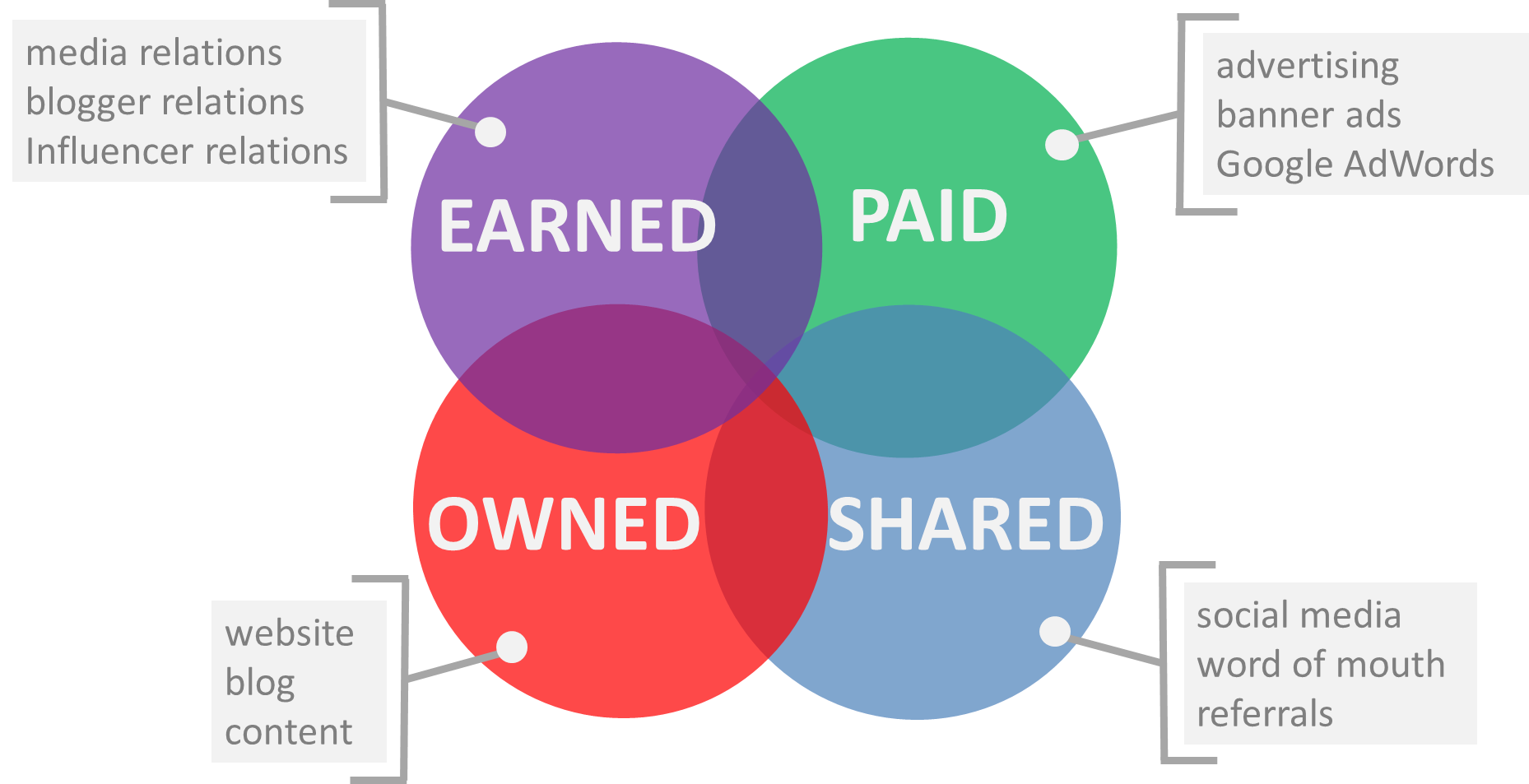
This is why content marketing has to be performed consistently across different platforms, including paid, earned, owned, and shared media – also known as the PESO marketing model.

peso markeing model Source: Pear Analytics

Content marketing, defined by Content Marketing Institute, is “a strategic marketing approach focused on creating and distributing valuable, relevant, and consistent content to attract and retain a clearly defined audience – and, ultimately, to drive profitable customer action.”

In the business-to-business world, 88% of B2B marketers claim to be using content marketing as a tactic. In business-to-consumer industries, 76% of B2C marketers claim they are using content marketing.

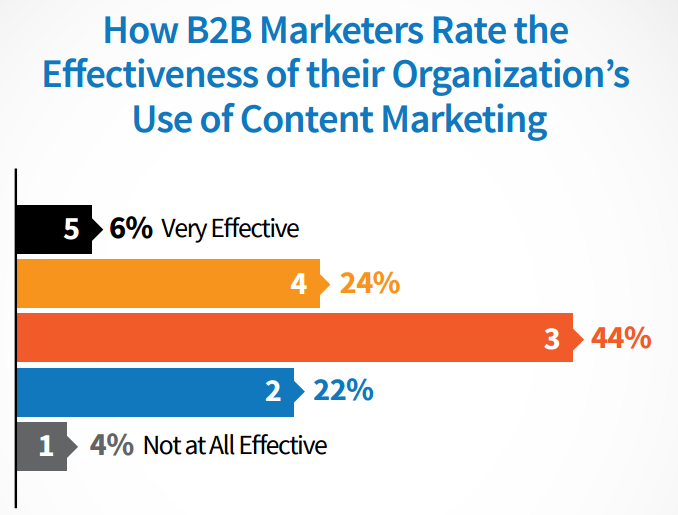
But only a fraction of those businesses actually think that their content marketing is achieving results that they want. Of the 88% of B2Bs who are involved in content marketing, 30% of marketers said it was effective or very effective, with only 6% of those claiming it to be very effective.

cmi b2b content marketing effectiveness

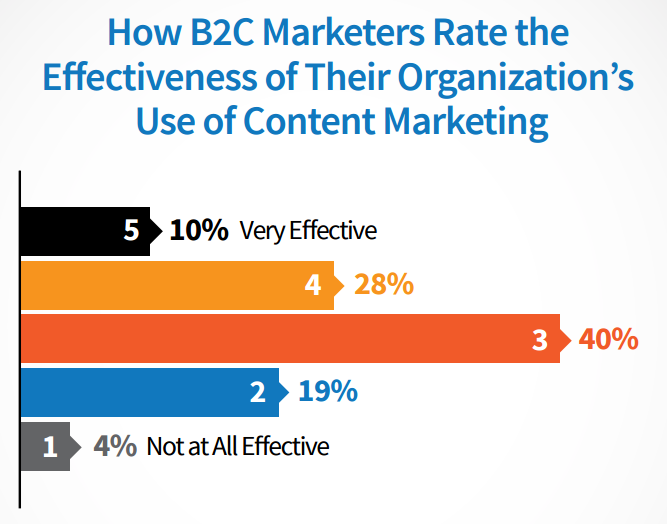
When it comes to B2C, 38% of respondents doing content marketing said it was effective or very effective, with 10% of those saying it was very effective.

cmi b2c content marketing effectiveness

What does this mean?

Across the board, over 60% of marketers aren’t seeing results from their content marketing efforts. A big reason for this is that they don’t do the research, know their target audiences, set goals, and track everything along the way in a documented marketing strategy.

Do you have a content marketing strategy?

A documented content marketing strategy is often the defining factor in whether content marketing succeeds or fails. In fact, without a documented strategy, you’ll only ever succeed by accident. Your strategy provides everything from data-driven research through to tactical execution, along with the analytics that show whether you’ve met your marketing goals.

So how many marketers in B2C and B2B have a documented content marketing strategy?

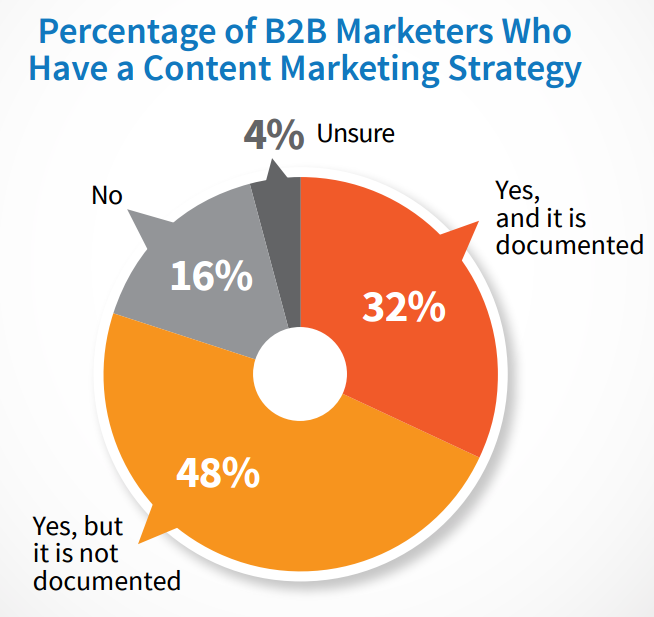
  • Only 32% of B2B marketers have a documented marketing strategy, while 48% have a marketing strategy that is not documented.

b2b documented marketing strategy

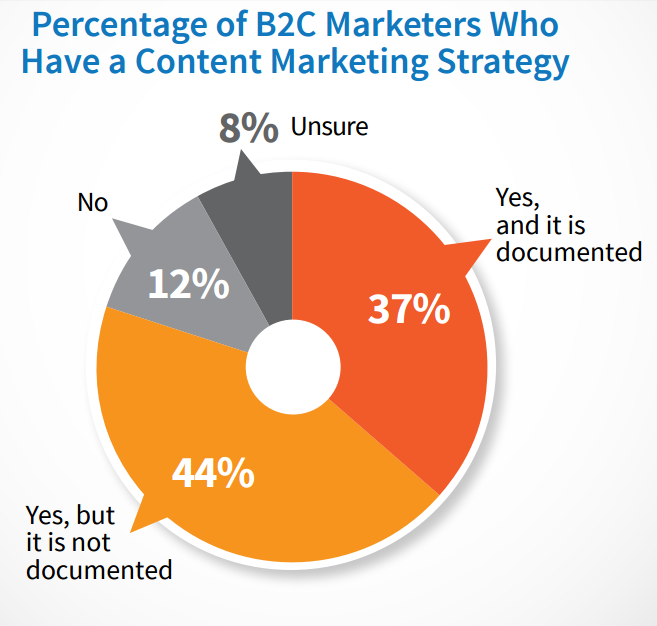
  • In B2C, 37% of marketers have a documented strategy, while 44% don’t document their strategy.

b2c documented content strategy

Strategies keep your brand’s messaging consistent across all platforms, and tracking everything lets you know that what you’re doing is leading toward your goals. If your strategy is unrefined or nonexistent, there’s no way to ensure cohesive content marketing efforts.

Having a documented marketing strategy is the key to keeping everyone in your organization focused, so each employee knows exactly how their role plays out in an ongoing, collaborative effort. Some vague abstraction of a strategy that exists solely in the minds of one or two people on the content marketing team won’t serve the team as a whole.

EZMarketing’s brand strategist, Brandon Peach, had this to say about content marketing strategy:

“A content marketing strategy helps to tell the story of your business. It’s essential that a content marketing strategy be documented, since it’s been demonstrated year after year that content marketers who do so feel more effective, and can justify spending more on their content budget.”

Documentation is the proof that shows whether or not a marketing strategy is working, and if  it is, companies are more willing to leverage a higher budget to continue evolving and optimizing their strategy.

Are you actively updating your content marketing strategy?

A strategy isn’t a once-and-done task. It’s something that needs revised and updated as the scope of your industry or business goals change. Strategy has to accommodate trends in the metrics you’ve measured, or the behavior of your target audience.

Your strategy should always be at the forefront of your mind and actions. It’s only natural for it to change according to key performance indicators (KPIs), the metrics important to your business, and when what you’re doing isn’t as effective as it could be.

The strategy that’s never updated is the one that can’t compete.

Do you have content marketing goals?

Consider why you use content marketing by asking yourself: “What do I want to accomplish?” You may have a strategy in place, but does it accomplish the goals you wanted to address in the first place?

A content marketing strategy should be born from the objectives put in place by the content marketing team. The chart below highlights common goals for B2B content marketers.

b2b content marketing goals

Your goals will define the specifics of your strategy. If your goal is lead generation and sales, then you might want to create more eBooks, case studies, and whitepapers in your content strategy to help generate more leads and sales.

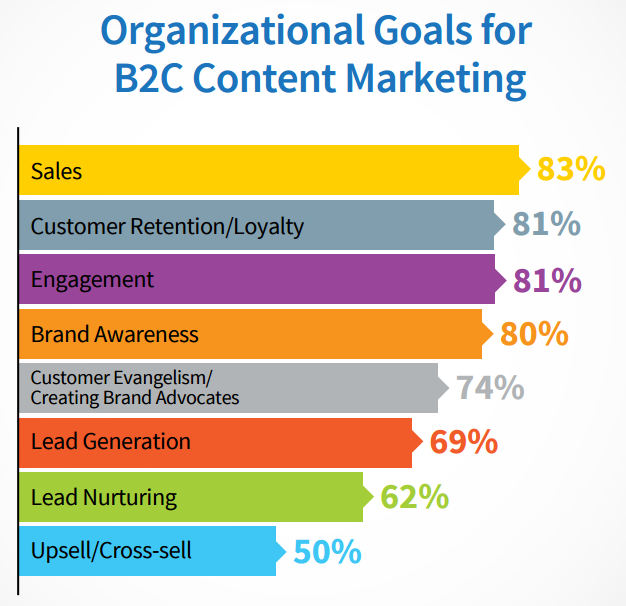
In B2C, organizational goals are slightly different, with sales also being a top priority in all industries.

b2c content marketing goals

In B2C, if you want to focus on customer retention, then work on better customer service, and providing unique, relevant, and valuable content through email and social media to your subscribers and followers.

Objectives keep a marketing strategy goal-oriented and your content marketing results-driven.

Are you promoting your content?

Promoting content is one of the two key parts of content marketing: creation and promotion.

While your content marketing team may be churning out great content, if the process ends there then content marketing simply isn’t working hard enough for you. In fact, it’s probably not doing anything at all, because you haven’t taken the next step, which is promoting that content.

Most experts say you should spend just as much time, if not more, promoting your content as you do creating it.

What are some ways to promote your content?

Social media promotions, email marketing, influencer marketing, and industry outreach are all great ways to promote your content.

Writing a new post for your blog or publishing a cutting-edge eBook to your website isn’t enough. If your website has a strong following, then your current audience may find it – but your target audience who isn’t aware of your brand probably won’t. If your competition is creating helpful content, they will be found before you will be.

You can promote your content through paid content promotion services like Outbrain, or targeting specific audiences in Facebook or Twitter to get the word out. Also, reaching out to industry publications, bloggers, journalists, and writers to let them know about your content and how it may be helpful for their audience. Figuring out the sites to place your content where your target audience visits takes a bit of work. But Rand Fishkin from Moz explains how to discover the sites your audience visits in this extremely helpful whiteboard video.

Marketers who spend more time promoting their content on the right platforms and websites will see more success than businesses who spend more time creating and not enough time promoting.

Are you spending enough on content marketing?

As we’ve said above, too few companies think that their content marketing is actually effective. Those same companies may not be spending enough money or time on their content marketing either, which can be a contributing factor to their lack of confidence (and results).

If you’re spending a minimal amount on content marketing, then it’s difficult to expect it to do everything it’s supposed to do as effectively as you need it to. Content marketing is about ROI, and if you’re not investing enough, you won’t be seeing those huge returns.

So what percentage of marketing budgets are being spent on content marketing?

For B2B, the average is about 28% of marketing budgets that are being spent on content marketing. The marketers that found content marketing to be the most effective were allocating 46% of their total marketing budget on content marketing.

Are you spending almost half of your marketing budget on content marketing? Those that see the best results are.

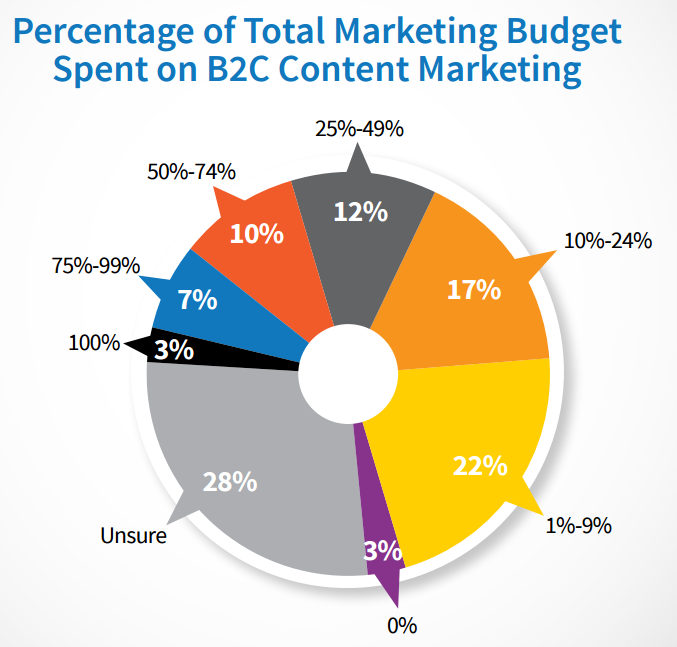
b2c content marketing budget

In B2C, 32% of marketing budgets are being spent on content marketing. The most effective marketers say that about 38% of their marketing budget is being spent on content marketing.

So what are you allocating from your whole marketing budget on content marketing?

It’s been shown that companies with strategic content marketing generate a higher percentage of leads than companies who don’t.

Ask yourself: “Is my content marketing working for me?”

Here’s the bottom line. If your content marketing isn’t working for you, it could be any number of things—from a nonexistent strategy, lack of promotion, a stifled budget, or unclear objectives and goals.

If you’re still wondering about where your content marketing stands, contact EZMarketing and we’ll do more than just develop content for you—we’ll help you create the strategy that gets results. Our Lancaster digital marketing agency offers content marketing a core internet marketing service.

Download free e-book - Content Marketing 101

Read more