Facebook Ads – Are They For You?

Facebook is like the social media elephant in the living room: it’s too big to ignore.  According to Social Media Examiner’s latest report, a commanding 93% of social marketers regularly use Facebook ads. Despite this, marketers are often unsure if their Facebook efforts are effective or not. When considering how to spend their precious advertising dollars, many businesses are still asking if Facebook ads are a good fit. Here are a few questions and common objections that will help you decide if you should be doing Facebook ads.

Are your customers on Facebook?

This is an objection we hear mostly from B2B businesses. “Facebook is great for B2C,” they say, “but my customers just aren’t on Facebook.” Is that really true?

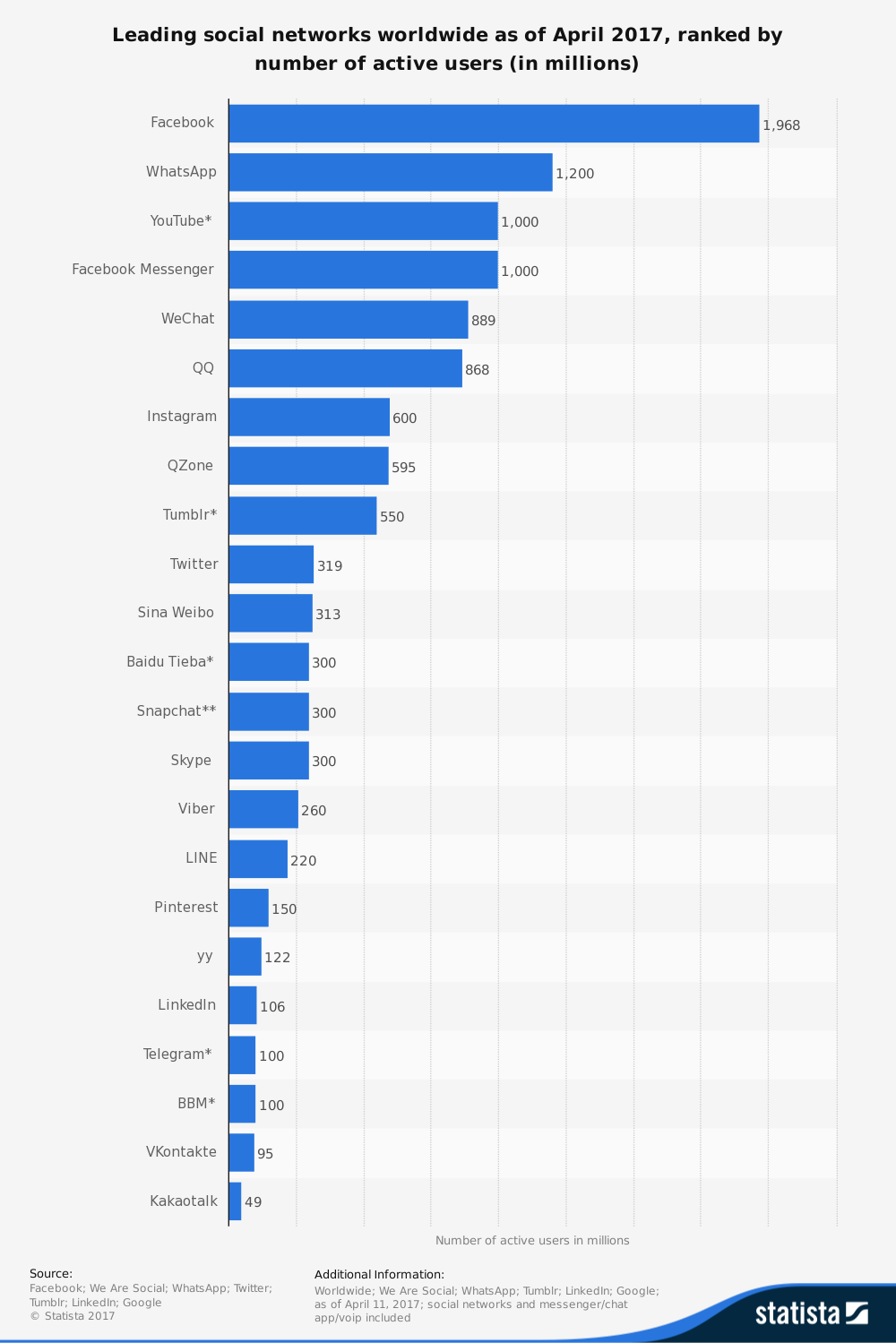
As of Q1 2017, there are 1.9 billion monthly active users on Facebook. Think about that for a minute. There are only about 3.7 billion Internet users worldwide, which means more than half of them are on Facebook. This number dwarfs the user count for any other social media platform. As you can see from the chart below, some of the closest competitors include WhatsApp and Facebook Messenger, both Facebook products.
https://www.statista.com/statistics/272014/global-social-networks-ranked-by-number-of-users/

Not only is Facebook’s audience huge, it’s also highly active. The company reported that users spend an average of 50 minutes per day on their apps (Facebook, Messenger and Instagram). When you think about people’s fragmented attention spans, that’s an enormous amount of time. In fact, Facebook accounts for one in every six minutes spent online.

With an audience that big and that active, it’s hard to believe that your customers just aren’t on the platform. Statistically speaking, unless you have an unusually niche audience who hates the Internet, your audience is probably on Facebook.

Can you reach your specific audience?

The great thing about Facebook is its astounding 1.9 billion users. The problem is that 1.9 billion is a pretty big haystack when your audience is a much smaller pile of needles. Thankfully, Facebook has highly advanced targeting capabilities so you can really hone in on your precise target audience.

Through partnerships with big data companies, Facebook provides sophisticated targeting that goes well beyond standard demographic and geographic criteria. You can reach audiences based on life events like getting married, having a baby or getting a new job. You can also target based on people’s behaviors, like buying a new car, travelling frequently or donating to charitable causes.

View the full infographic here.

Even better, Facebook allows you to create Custom Audiences based on people who have visited your website, or email and phone lists that you already have in your database. Layer in demographics like age, job function or geographic location to get hyper-focused. You can also use Custom Audiences to send retargeted messages to people who already know you, which helps increase conversions. Lastly, Facebook can create Lookalike audiences that have similar traits to your custom audience, allowing you to reach more people just like your Custom Audience.

Remember, there are great options here for B2B too. You can target based on job title, employer, company size, industry and more. The behavioral filters also let you narrow by business purchasing behavior, such as people who have purchased business repair/maintenance services. Of course, Custom and Lookalike audiences are a powerful tool for B2B as well as B2C.

Can you afford Facebook ads?

Budget is always a factor as businesses debate how to best spend their advertising dollars. Facebook ads are a popular choice in part because they are so affordable.

The average cost per click (CPC) for Facebook ads in the U.S. is about $0.28.  This is significantly lower than the average CPC for Google search or display ads, which are $2.32 or $0.58, respectively.

Compared to other advertising methods, Facebook provides an immense opportunity at an extremely affordable price. In fact, the minimum ad spend on Facebook is just $1 per day. A recent blog article from Moz makes the case for Facebook ads, showing how just $1 can get your business in front of 4,000 people per day.
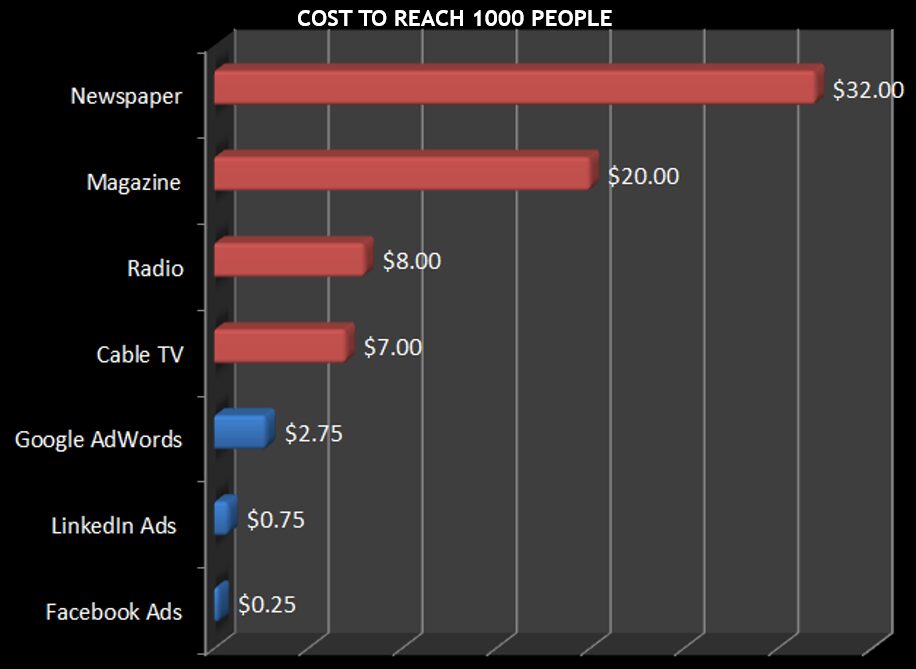
Of course, many businesses will want to invest more than $1 per day in order to drive more significant results. Regardless, as the author says, “If you can’t spare $30 a month, you shouldn’t be in business.”

Do you really need them?

If you already have a great Facebook business page with tons of followers and engaging posts, maybe you’re thinking you don’t need Facebook ads. Or, perhaps you’re investing in other social channels and don’t want to add Facebook into the mix. Think again.

Facebook has become notoriously “pay to play,” with organic reach plummeting to as low as 2% and continuing to drop. Businesses can no longer count on only regular posts on their business pages to reach their audience. Like it or not, paid promotion is now a necessity to drive results on Facebook.
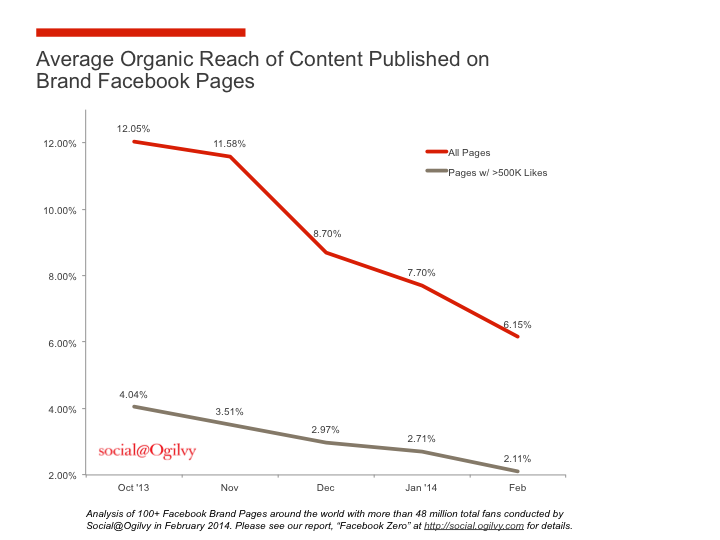
If you don’t like “pay to play,” why not avoid Facebook entirely? The problem is that Facebook is the gateway to the ever-growing mobile audience. Facebook boasts 1.5 billion mobile users, of whom almost 900,000 log in exclusively via mobile. This gives Facebook one of the largest mobile-exclusive audiences in the world. So if your customers are browsing on mobile, you should definitely be considering Facebook ads.

Do Facebook ads work?

This is the ongoing debate. Despite the number of businesses who use Facebook ads, many don’t feel like their ads are working. There are a variety of reasons for this.

Remember that Facebook is a social network, and advertising there is fundamentally different than AdWords. People aren’t on Facebook to buy your products or download your new e-book. They’re there to see photos from friends,  to keep up with news, to share what’s important to them. Bottom line: they’re not necessarily in a buying mood.

So what does that mean for  you? First, make sure your approach is focused on promoting content that is truly compelling, entertaining, or shareable, not just pushing your sales message. Your message needs to be highly compelling and highly clickable to compete with funny cat videos.

Second, make sure your goals are realistic. If you have an e-commerce business, direct sales ads may work for you. For many others, Facebook is more effective for uses like brand awareness, engagement or lead generation.

Lastly, many Facebook ads fail because they are not properly targeted. Facebook has such immensely powerful targeting capabilities, they’re almost creepy. (If you don’t believe me, check out this example of a guy who used Facebook ads to prank his roommate). Make sure you’re taking advantage of these powerful tools.

Implemented correctly, Facebook ads can be extremely successful and highly cost effective. Facebook has a ton of case studies to prove it.

Wrap up: should you advertise on Facebook?

Simple answer: probably. Even if Facebook isn’t a core part of your business strategy, it offers enormous potential benefits with an extremely low cost of entry. Of course, there are always variables an exceptions to the rule, but overall if you can spend a couple dollars a day to leverage an audience of billions to get in front of your precise targeted audience, why wouldn’t you?

Next Steps

Need help getting started? We’d be happy to sit down with you for a free no-risk, no-obligation Facebook review.

Schedule your FREE Facebook Audit, which includes:

  • Review of your current Facebook business page
  • Suggestions to improve your posting strategy
  • Review of your current ad strategy (budget, targeting, content, etc)
  • Research of potential target audiences & reachStart A Conversation

Read more

5 Key Takeaways from the 2017 CMI B2B Report

The most recent B2B content marketing benchmarks, budgets, and trends report for 2017 is out. Here are a few interesting key takeaways to take from the report.

1. Content marketing spend vs. increasing amount of original content

img1 img2

Of those polled, 70% said they expected to be generating more unique content, but only 39% of those expected to increase their marketing spending. If you’re wondering how so many marketers expect to generate more original content for the same amount of spend, consider optimizing existing content to boost site traffic.

Content audits are a great way to capitalize on work you’ve already done while keeping your content fresh and relevant to readers and search engines. Besides, there’s little point to inundating a website or campaign with more content if your old content is still performing well. In the case of original content vs. new content, less is more as long as the content is high quality. Refreshing old content is, generally speaking, more preferable than generating brand new marketing material if you are still seeing a high return on your investment on creating that content.

2. Content marketers are going after lead generation and brand awareness

It’s integral to any marketing campaign to establish clear goals early. Goals are how your company will gauge the success of its content marketing, but also how it will direct those same marketing efforts.

img3

Lead generation is a logical goal for marketers, and so is increasing your brand awareness; but the interesting part is that fewer than 45% of marketers are worried about creating brand advocates. Never underestimate the power of customer evangelism because if you aren’t encouraging positive feedback or providing your audience with a space to build that fan base, then you’re missing out.

We’ve talked about relationship management before and how it can be used to frame public perception of your brand, so if you’re not actively engaging with your customers and managing the relationship your brand has with them, you’re losing an opportunity to have others help to expand your brand awareness.

With social media, viral videos, and brand enthusiasts, it’s never been easier to increase the reach of your brand. If you have customers out there spreading word of how awesome you are, doesn’t that kind of tie into generating new leads as well? The more people who know about you, the greater your opportunity for new leads.

3. Email isn’t dying as quickly (or at all) as some marketers believed

There’s been a deal of consternation among industries as to whether email is a dying marketing channel, or if it’s simply being wasted on the younger generation. Despite the many varied articles and blogs regarding the topic, the marketers polled by CMI—93% of them—were utilizing email to distribute their content.

img4

4. Social media is still top of its game as a go-to marketing tactic

While content marketers are still using an array of tactics, social media is being used by more than 80% of them, which isn’t really a huge surprise. With the changes Facebook made to its business pages and platforms like LinkedIn for B2B businesses, social media is an ideal channel and tactic for content marketers.

img5

It’s also important to note the continued popularity of infographics and whitepapers. These tactics are fairly evergreen, as well as being a reliable way to get backlinks. Remember that whole ‘less is more’ line from earlier? Well, implementing a few updates to an existing (but potentially out of date) eBook, whitepaper or infographic can make it good as new again, or in the case of content marketing, relevant.

5. Site traffic the leading metric for content marketing measurement

img6

Content marketers have been using website traffic as a metric to measure results of their content marketing efforts, but they’ve also been paying attention to sales, the quality of those sales leads, and conversion rates. You could argue that it’s strange to see how few marketers cited higher conversion rates or even SEO rankings as a metric. Nevertheless, it’s interesting to see that despite social media content being one of the top tactics being used, only 22% are using social media sharing as a metric of measure.

Marketing trends come and go, but paying attention to what we’ve been doing as content marketers is the only way to adjust course when we notice patterns that really aren’t optimizing tactics that work.

Download free e-book - Content Marketing 101

Read more

Digital Summit Philadelphia 2016 Recap


Digital Summit Philadelphia, from August 23 – 24, was packed with dozens of speakers, including digital marketing experts, CEOs, data scientists, SEO gurus, business owners, and even a comedian. Five members of the  EZMarketing team ventured to the two-day event and learned far more than can be written in a single blog post – but we wanted to take the time to share some key takeaways from the many sessions we attended in our Digital Summit Philadelphia 2016 recap.

Read more

5 Things to Ask Your SEO Company

 As Search Engine Optimization continues to evolve, so to should the services of any SEO company worth its salt. From Panda to Penguin, the eradication of poor quality content and spam links was only the beginning.

Newer changes like machine learning in the form of RankBrain and major Google AdWords updates continue to shake-up SEO marketing. Even the most minor changes can cause ripples in the SEO industry, leaving professionals with a need adjust their tactics in order to stay relevant.

With every algorithm update and change to Google’s advertising platforms, SEOs need to keep on their toes to stay ahead. If an SEO doesn’t evolve, neither can their business.

As a business owner, you expect your prospective (or current) SEO company to be an industry expert. You want a team full of knowledgeable people committed to staying ahead of the SEO marketing curve. Even more than their knowledge and experience, you want to be able to trust your SEO company to do what’s right for your individual business needs.

To see the most return on your investment and partner with the right team, here are some things you should always ask your SEO company:

1. How will you improve my rankings?

This question is by far the most important, and complicated, to ask your SEO company. If you’re interviewing a good SEO company, there should be no easy answer to this question. Because of its complexity, it’s best to ask it right out of the gate.

search-rankings

The best SEO company will not shy away from the question, while a less than desirable company may try to distract you with irrelevant data or industry jargon that’s simply not important at this stage in the game. They should have no problem walking you through their process – preferably with an easy-to-understand guide.

If you’re posing this question to your current SEO company, the same rules apply. They should be confident in their response and able to supply the data you need to support their choice in tactics.

2. Do you guarantee rankings?

If the first question didn’t weed out the SEO snake oil salesmen, this one surely will. Always ask your SEO company if they guarantee rankings. If they say “yes,” the conversation should end there. While guaranteed rankings might seem like a good thing, they’re an outdated SEO marketing practice that no respectable SEO company will stand by in 2016.

With algorithm changes and platform updates, rankings are hardly ever stable. It’s natural for your rankings to fluctuate a few positions day-to-day. The right SEO company understands the natural ebb and flow of rankings and won’t guarantee anything.

What they should do instead is assure you that their processes are proven to improve rankings, optimize your site, and bring you quality traffic. Modern SEO marketing is less about rankings and more about attracting qualified, ready-to-buy leads to your site. This is what you should want from your SEO marketing efforts instead of a guarantee.

3. What are your certifications?

Once you feel comfortable with the high-level view your SEO company gave you of their processes, it’s time to nail down their experience. You’ll find SEOs that have been in the industry for 20 years, and those that are relatively new. While years of experience can be an advantage, you want to ask about certifications.

google-partner

An SEO company that has taken the time to learn new material and take a series of tests to prove their knowledge is one you want. This proves that they’re willing to do the work it takes to expand their skills, making them an expert in their industry.

SEOs that take the necessary time to complete and renew their certifications are usually up-to-date with the most current search trends. Look for an SEO company that is Google Analytics and AdWords certified, and is a Google Partner. Other certifications like Hubspot Inbound, Content Marketing Institute, and DistilledU are icing on the cake.

4. Do you need to make changes to my website?

A good SEO company will have on-page changes as some part of their SEO process. The best SEO company will have a set-up process that clearly outlines any frontend and backend changes they need to make to your site, and why these changes need to happen. If these on-page changes aren’t scheduled into their process within the first month of service, they’re not the right company for you.

On-page changes set the stage for an SEO marketing campaign – that’s why they should be done before any other SEO efforts begin. These changes help address any technical issues that may be negatively affecting your site, getting it up to Google’s standards. You should also expect help with content optimization for important keywords, and even ways to improve your user experience.

It’s so important to ask your SEO company about the changes they want to make to your site before you give them any sensitive information like website logins and FTP credentials. Changes will most likely need to happen on a server or database level and an SEO company that is inexperienced with backend changes can seriously damage your site.

5. Can you provide case studies, references, and testimonials?

After you have a good idea of the company’s SEO processes and experience, it’s a good time to ask for some tangible data. Your SEO company should have a wealth of educational material and case studies that are used to back-up their good work. If the company doesn’t have any current case studies, that should be a red flag.

reviews

Case studies are important to look at because in most cases, data doesn’t lie. When you can see true clients with real traffic and ranking improvements, you can better understand the SEO company’s worth.

Aside from case studies, references and testimonials or reviews are the best way to hear about the company from a previous client’s position. While a company can make themselves look good by choosing the best case study, their clients will be honest. As in most things, the best way to find out if something worked is to ask a person who has used it before.

Adding SEO marketing to your digital marketing strategy can make or break your site. While a successful SEO marketing campaign can double your traffic and sales in some cases, a bad campaign can tank your site’s rankings. Very few online business can afford a manual penalty brought on by shady SEO practices.

Protect yourself and your assets by asking these questions before signing up with an SEO company. When you find a company that can answer these to your satisfaction, you’ll know you’ve found your search partner.

SEO strategies CTA

Read more

Examples of Integrating Marketing Channels


Most companies try all different sorts of marketing tactics to obtain more leads and business. But a lot of those companies don’t know exactly what is working or how to integrate their marketing channels so that their brand message and marketing is, for the most part, consistent and tracked. Different channels can use different messaging, but your brand story should be consistent throughout.

Read more

Tactics for Tracking Your Marketing ROI


What’s the return on investment of a phone call? A form fill? An email click-through? In the age of data, using tracking tools to monitor and record your lead sources and determine the dollar value of every conversion—that is, every action a prospect takes—is easier than ever. Let’s take a look at some of the things you should be measuring, and how to track them.

Phone call tracking

i0q6

When someone calls your business, it stands to reason that they found your number somehow, whether through word of mouth, a Google search, eventhe Yellow Pages (yes, they still exist). Determining how they found you is a critical step in determining whether the marketing effort you employed that ultimately resulted in the lead was worth your money.

Using a unique phone number for each campaign—PPC marketing, email, billboards, your website design—allows call tracking software to determine where your leads are coming from. This allows you to ramp up or dial down campaigns as needed and focus your valuable marketing budget where you know it’ll have the greatest impact.

Custom link tracking

Custom URL parameters are an incredibly easy way to track the success of everything from your direct mail pieces to your social media campaigns. If the term “custom URL parameters” scares you, take a breath—it’s not nearly as difficult as it sounds.

When you integrate your site with Google Analytics, you create the rules by which your data is tracked. In doing so, you’re able to effectively monitor the lead sources of traffic to specific pages of your website, including direct traffic, search engines, referring sites, social media leads, and more. Again, when you learn the channels that drive targeted traffic, and measure which of those leads convert over time, you’re able to put more money and effort into the campaigns that work best for you.

Unique landing pages

When you run an ad campaign, where are you attempting to drive traffic? Sure, you want visitors to go to your www., but unique landing pages for each campaign allows you to do a couple great things.

First, it allows you to track your lead sources (which at this point, should be a given). But it also allows you to create highly targeted messaging leading to a call to action. Special offers, coupons, and discounts on your landing pages may result in increased conversions. As Unbounce says, “Targeted promotion or product specific landing pages are focused on a single objective that matches the intent of the ad that your visitors clicked on to reach your page.”

Custom forms


We’re not going to say that every page of your website needs a form, but if we’re being realistic about conversions, most should. Long gone are the days when a simple email address to contact was the best way to 

p1a37

solicit customer questions and feedback. With contact forms, you can collect data about the type of people who want to know more about your business, and store their IP addresses so that you’ll know when they return.

Form-fills should also factor heavily into your content marketing strategy. Provide value to your customers for free—the only thing they’re required to give you is an email address so that you can keep in touch. (If you’re not using forms as a part of your content marketing strategy, or if you’re not doing any content marketing at all, read up on making this incredibly valuable marketing approach work for you.)

So much data to track

Think about all of your marketing campaigns—email, PPC, direct mail, social media, even billboards or the brochures you might distribute for a special event. Every single person that takes an action as a result of these activities is a data point. When you view them as such, and when you’re confident about the pool of data you’ve gathered, you can ensure that the money you spend on your marketing is invested rather than wasted.

And with a limited marketing budget, every dollar that marks a return on your investment is critical. Our marketing company in Lancaster, PA can help you get your arms around your marketing efforts and track how that investment is paying off for you.


Start A Conversation

Read more

Top 10 Productivity Tools for Marketing


The first part of the Tools for Marketers series begins with productivity tools. Productivity is everything for marketing. Any way we can optimize and hack our time for campaigns to achieve the best results is something any marketer strives for. This is why tools for marketers are an imperative part of our daily work for tracking our production.

1. IFTTT

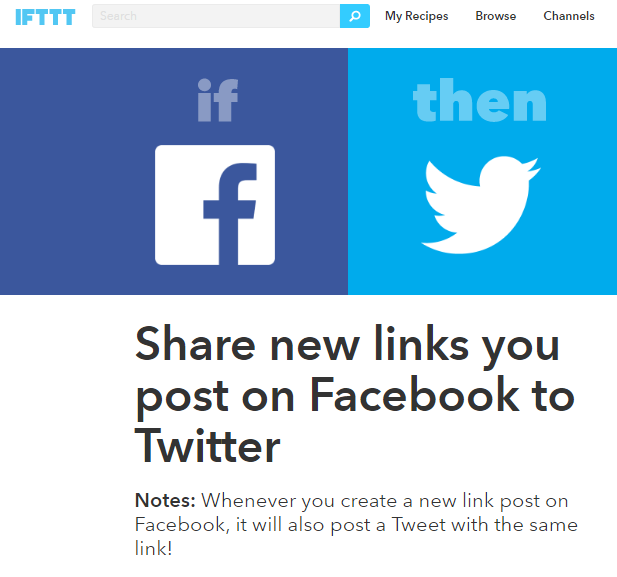
If This Then That is a great way to automate recurring tasks. You setup recipes that connect two of the ever-growing list of apps that triggers a logic for “if this” happens “then that” should happen. For example, you can create a recipe that connects Facebook and Twitter so that whenever you do something specific on Facebook, like share a link, it will also tweet that on Twitter. If you manage a bunch of Facebook pages, IFTTT allows you to choose the specific page you want the actions to trigger for.

ifttt fb to twitter

There are a lot of other ways you can sync social media platforms, like keeping your social profiles consistent by creating a recipe for when you change a Facebook profile picture to also change it on Twitter.

2. Pocket

Pocket is a plugin and app that you can easily save an online article to read for later on any device you have Pocket on. So when you are in the middle of something but get an e-mail with blog posts that you know you need to read, you can Pocket them for later. But the real power of Pocket is that it is another app that you can integrate into an IFTTT recipe.

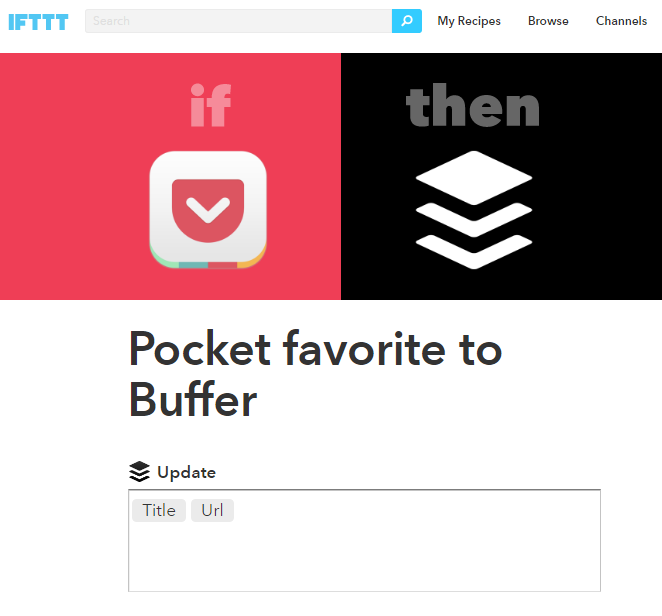
You can connect Pocket to social media platforms to share online, but an even better way is to create a recipe that will take your favorite content from Pocket and add it to your Buffer queue.

pocket to buffer

3. StayFocusd

With the content overload and social media era that we live in, sometimes you can lose your focus online. StayFocusd is a Chrome extension (and they have similar for Firefox users), that you can set to only allow you to be on certain sites that you choose, like social media or shopping sites, for a limited time every day.

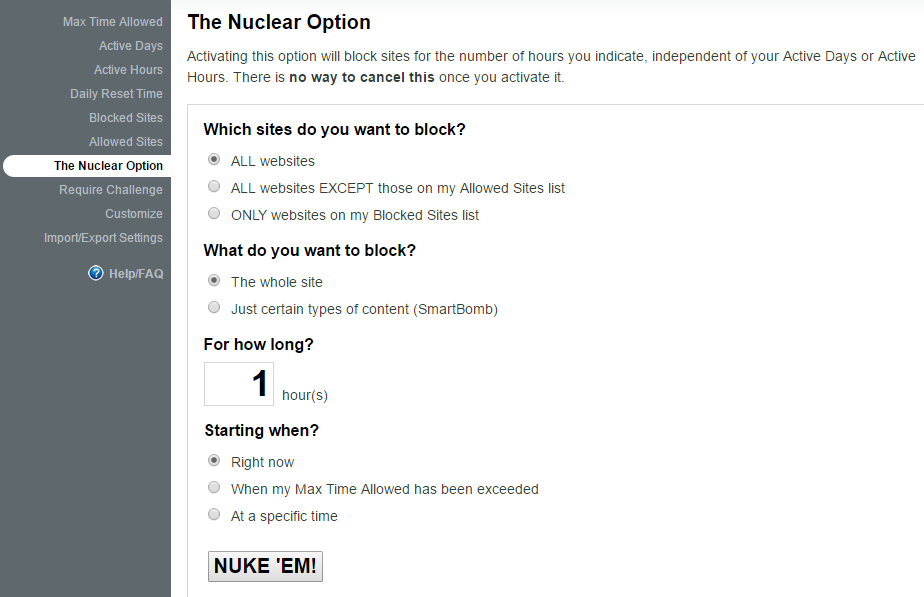
If you really need to finish a project that doesn’t require any research or browsing, they also have a nuclear option that really lets you focus on the project at hand for the length of time you set.

stayfocusd

4. Toggl

Toggl is a desktop application available for Mac, PC and mobile that allows you to track your time more efficiently as you switch between tasks. They also have a Chrome extension that makes it even more easier for you to track tasks on the go, which also works with dozens of apps and sites like Salesforce, Evernote, Asana, Basecamp, Trello, Google Drive, Wunderlist and many more.

You can assign and track tasks for team members, associate costs to time spent, and get a great overview of how you are spending your time on projects and meetings.

toggl

5. Wunderlist

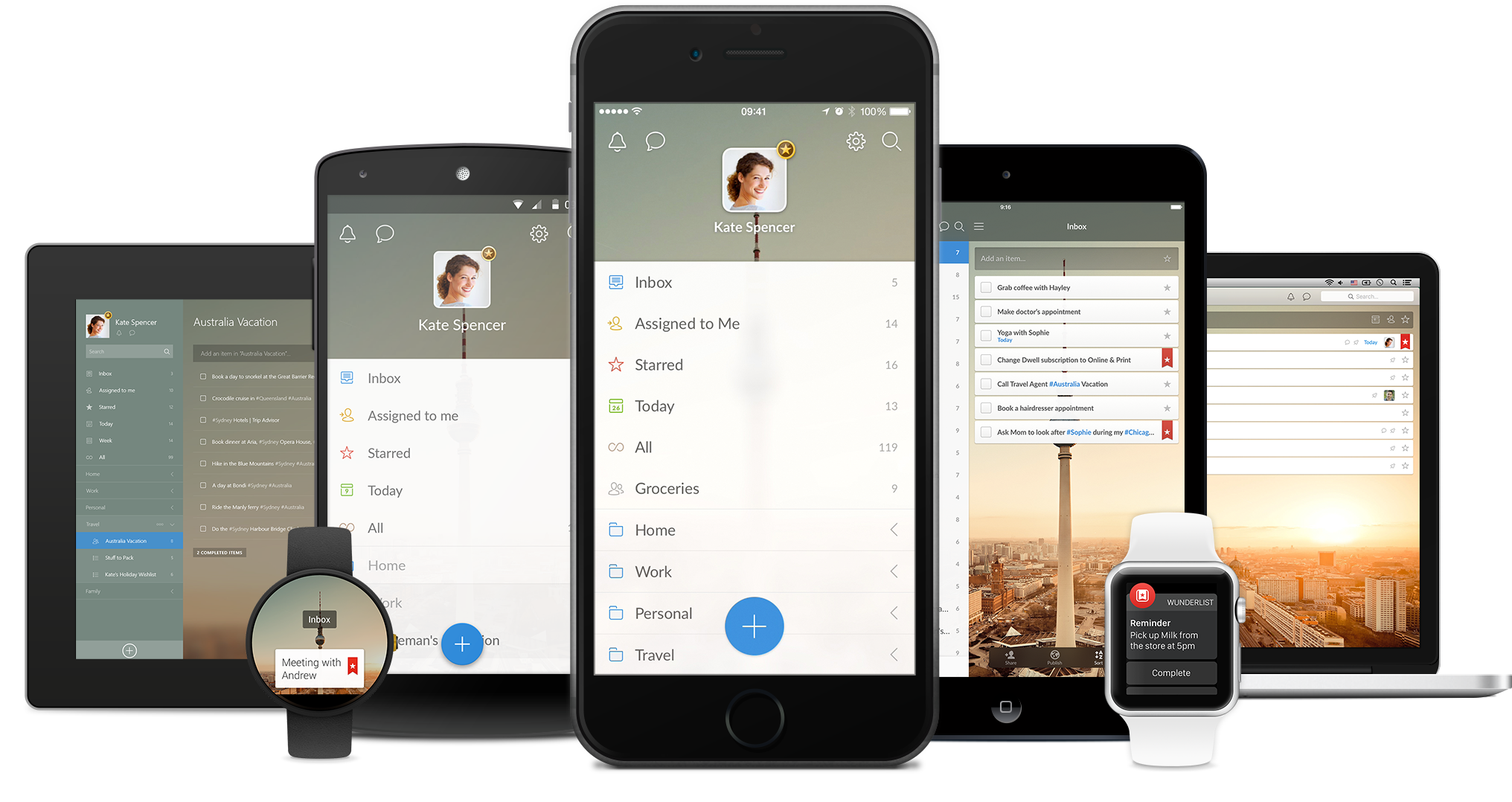
There is a plethora of get-things-done applications out there, but Wunderlist is great for its seamless integration across all of your devices, interacts with other applications like your calendar, and is a great way to brain dump tasks and get them organized and prioritized efficiently.

wunderlist

6. Canva

As humans we are drawn to visuals. As marketers we all need to have the basic capitality of design, whether it’s creating a quick design for a social media post, or it’s adding text overlay to an image.

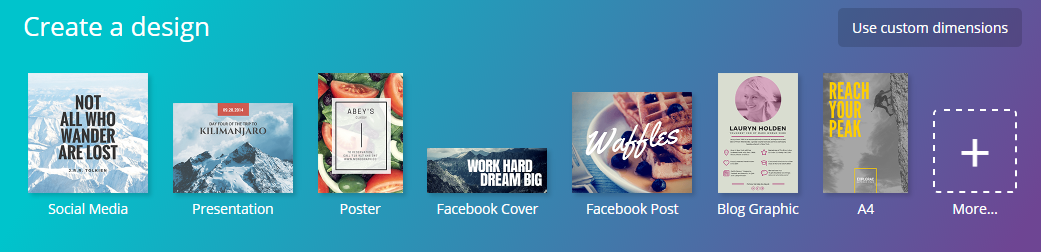
Canva helps by making it easy to find the right resolution for every image for whatever platform you are creating. You can upload images, choose from their library, or buy a stock image, overlay your text, and load it up for social media.

canva

7. LastPass

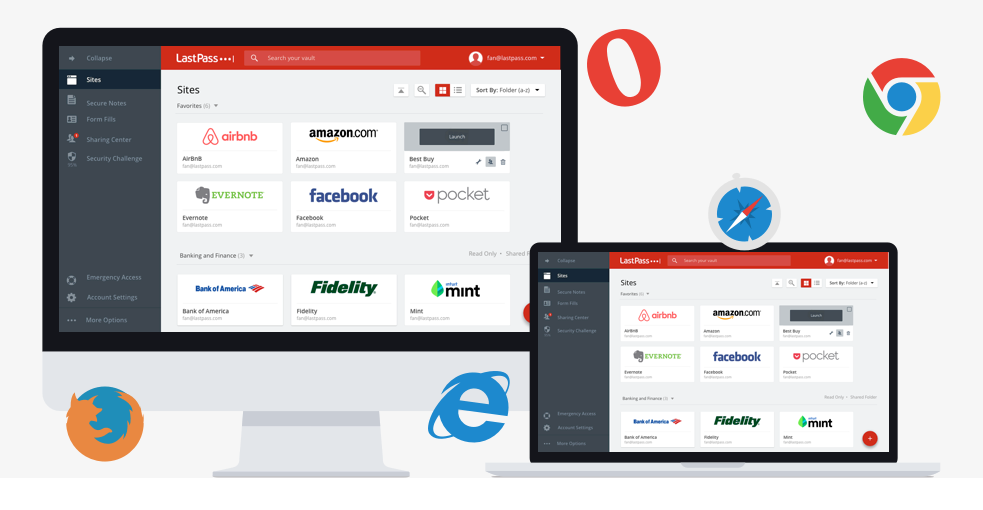
Being able to access your accounts across the internet quickly is important so you aren’t wasting time trying to figure out or recover your passwords. This is especially true if you have a lot of client logins on social media sites. LastPass, while it was breached in 2015, is still one of the best password managers available. With different settings and configurations, you can get into your accounts with ease, or setup new logins with their password generator.

lastpass

8. Evernote

If you’re keeping notes in notepads or textpads, whether in physical form or on  your computer, you’re behind the times. Not just a note taker, Evernote helps to organize thoughts, clip ideas from the internet, automatically save and organize e-mail attachments like receipts, and so much more. It works smoothly across all of your devices for when you have that campaign idea on the go that you need to write down, and also integrates with IFTTT recipes and other apps. This video shows how easy it is to use their Evernote Web Clipper.


9. Rapportive

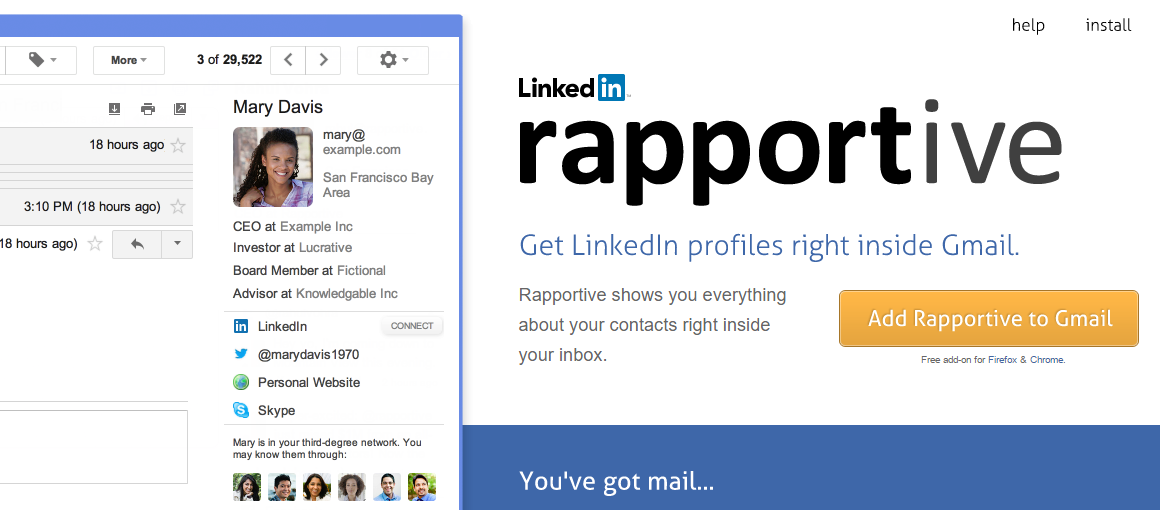
Owned by LinkedIn and with addons for Chrome and Firefox, Rapportive allows you to dig up information on a contact right from Gmail. It will find any mutual LinkedIn connections you have with them, as well as their Twitter, Skype, website, and other contact information so you don’t have to do any digging.

Let’s say you don’t know the person’s email you are trying to reach out to. By putting in different combinations of their email (first initial, last name, full name, first name, last initial, etc.), Rapportive will display their information in the sidebar once you have found the correct email.

rapportive

10. Voila Norbert

Not knowing someone’s email address that you want to contact can be a daunting research task if it isn’t readily available with a simple Google search. And if the Rapportive trick doesn’t work, or even before you try that method, you should give Voila Norbert a try. All you need to know is the person’s first and last name as well as there domain address. Norbert does the rest and in most cases will bring back their email address. Just run it through mailtester.com first to verify the email is legit.

voila norbert

From automating recurring tasks, forcing your focus on projects, organizing, prioritizing, and tracking tasks to creating images in a breeze, compiling your ideas and finds from the web, and conducting more efficient outreach, these tools can really help you become a more proficient marketer.

We use these (and a lot more) to make sure we are making the most out of our time for ourselves and our clients. So if you feel like your marketing efforts are too daunting, or just need some more digital marketing tips, then sign-up for our weekly emails featuring the latest tips and trending industry news. And if you’re looking for a marketing agency near you, give us a call. Our marketing company has helped small businesses throughout Lancaster, Harrisburg, and York.

Start A Conversation

Read more